Kiaf Special Exhibition 1 《HUMAL》
《HUMAL》 Curatorial Statement
We live in an age in which artificial intelligence stands in for human judgment, and much of life is converted into data and migrates onto screens. We work without using our bodies and form relationships without ever meeting. Yet the more convenient life becomes, the more a paradoxical lack remains: the primal vitality and bodily senses that humans have possessed as living organisms are growing dull.
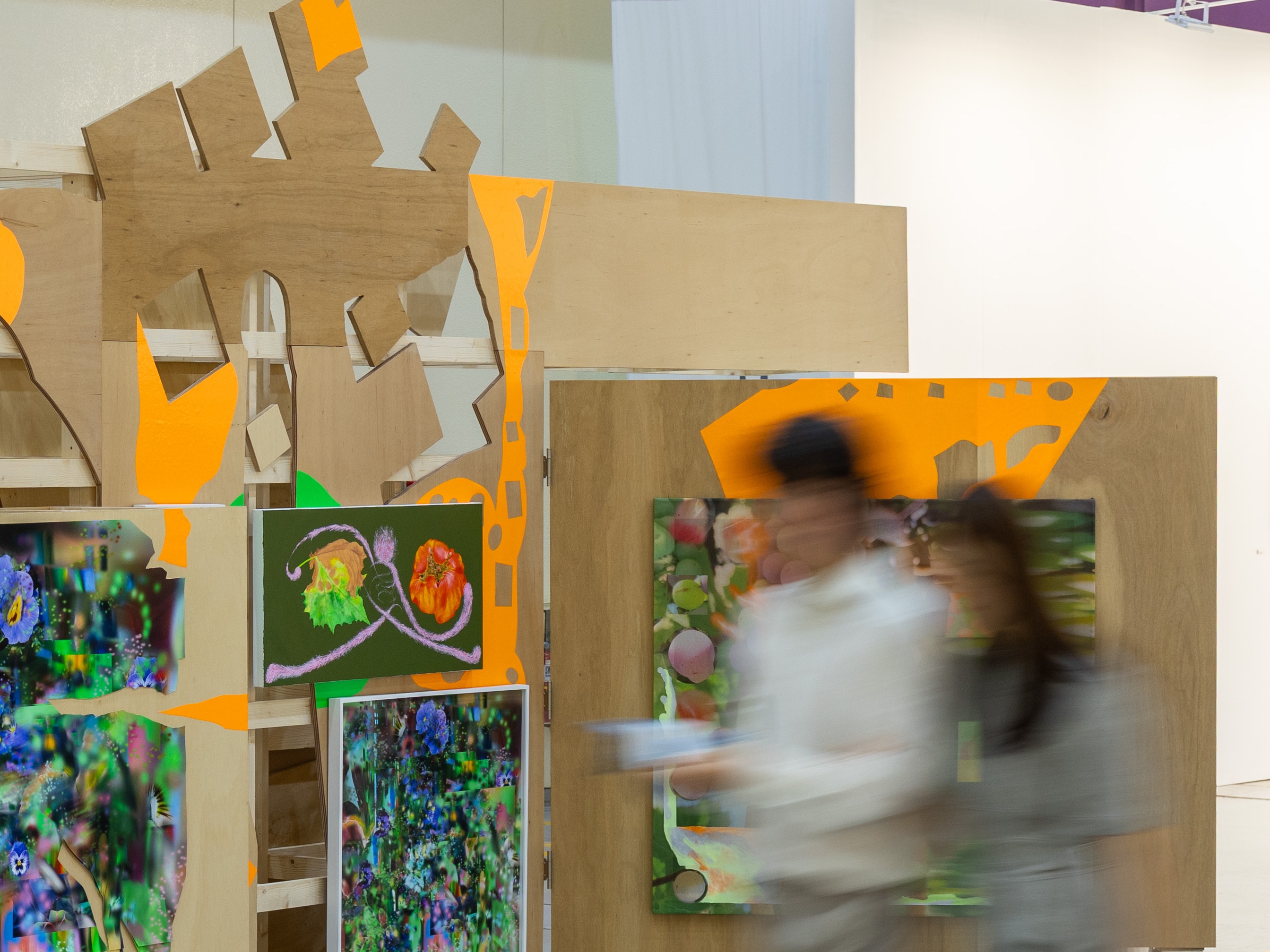
《HUMAL》, the special exhibition of Kiaf SEOUL 2026, begins from this lack. The title is a coined word combining “human” and “animal.” It is a declaration to summon back the animal within the human—the wild instinct and bodily senses long suppressed by civilization and reason. The French philosopher Maurice Merleau-Ponty argued that before humans comprehend the world with the mind, they encounter it through the “flesh” (chair): the bodily senses of seeing, touching, and rubbing up against the world form the very ground of existence. Borrowing this insight, 《HUMAL》 brings the rough, heated materiality and bodily sensation pushed beyond the digital screen back into the very heart of the art fair.
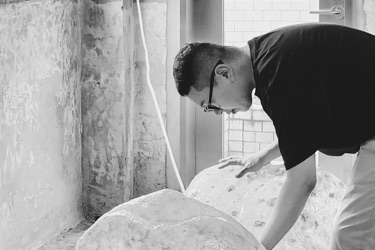
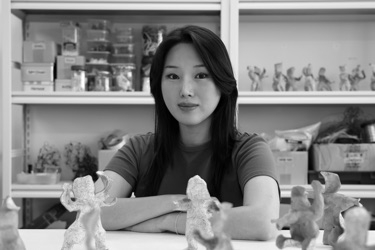
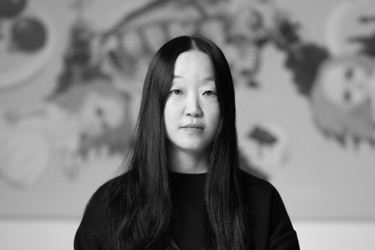
All seven participating artists engage with the body. Starting from sculpting his own face, Kun Kang has created hybrid figures in which human and animal intermingle. He works with animal-derived materials such as leather, feathers, and wool felt, and has recently begun shaping thin, fragile outer shells—like birds’ eggs—by mixing calcium carbonate with animal glue. These are unstable bodies in which softness and sharpness, persistence and collapse, coexist within a single form. Jisu Kwak prints out the flawlessly polished images of the body found in advertisements and stock photography, then crumples and tears them before rebuilding them into sculptures of the human figure. Animal fragments—a pig’s teeth, a monkey’s mouth—infiltrate the human body, giving rise to bodies that resolve into neither a single gender nor a single species.
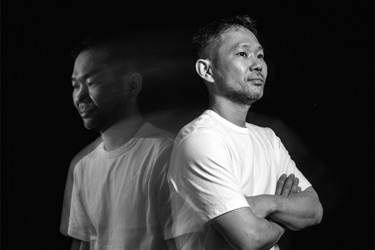
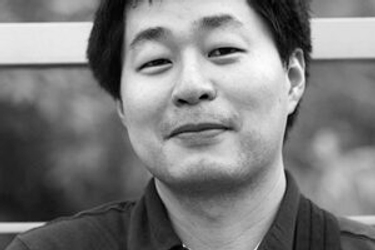
Painting and photography pose the same question. Byunghee Sung renders the unconscious within the human psyche in animal form. The animals on his canvases are not depictions of nature but portraits of instincts, wounds, and memories that never disappear, however firmly reason suppresses them. Photographer Heinkuhn Oh, best known for his ‘Ajumma’ and ‘Girl’s Act’ series, presents 《Ambivalent》, a new series of portraits. Through the faces and bare bodies of young people drifting between male and female, reason and instinct, the work records the “impression (insang, 印象)” that lingers beyond facial expression.
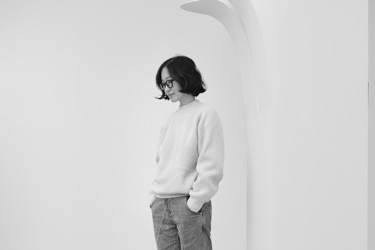
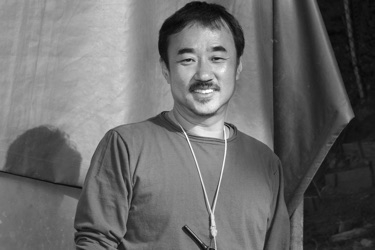
The three sculptors question the very mode of the body’s existence. Dongwook Lee shapes transformed and contorted bodies in small, realistic human sculptures. These seemingly grotesque figures are rooted in compassion for human beings and awe before the force of life. Hwankwon Yi has long created human figures compressed flat or stretched long, like images distorted on a CRT screen. He calls his sculptures “shadows of existence”—the body as a totality of sensation that remains where language has fallen away. Sueyon Hwang presents her ‘Paper Body, Paper Face’ series, constructed by cutting and joining sheets of paper. Barely sustaining their volume with thin outer skins, these sculptures are beings situated somewhere between human, animal, and plant, asking whether fragility itself can become a form of possibility.
《HUMAL》 neither rejects technological civilization nor calls for reversing evolution. It proposes finding a new equilibrium at the point where the artificial order of reason and the primal energy of instinct collide and resonate. Walking among the rough, heated bodies shaped by these seven artists, viewers will paradoxically encounter the most human warmth in the age of the most futuristic technology.