Hyungkoo Lee
▷ How did your current body of work begin?
It began with the experience of confronting my physical differences from others during my years studying abroad. In the 《The Objectuals》 series, I made and wore optical helmets and devices that alter the body to fit the standards society favors, seeking to expose, in reverse, the frameworks of gaze and the norms that define the body. In that process, I discovered that the transformed appearance resembled anthropomorphized characters, and that discovery expanded into the 《ANIMATUS》 series. By analyzing virtual characters anatomically and recreating them as skeletal structures capable of actual movement, I have continued an inquiry into making us believe in the real existence of beings that do not exist. What runs through all of my work is the effort to understand, through the medium of the body, what kind of being the human is.
▷ Your work ‘The Garden of Monsters’ has been realized in AR (augmented reality).
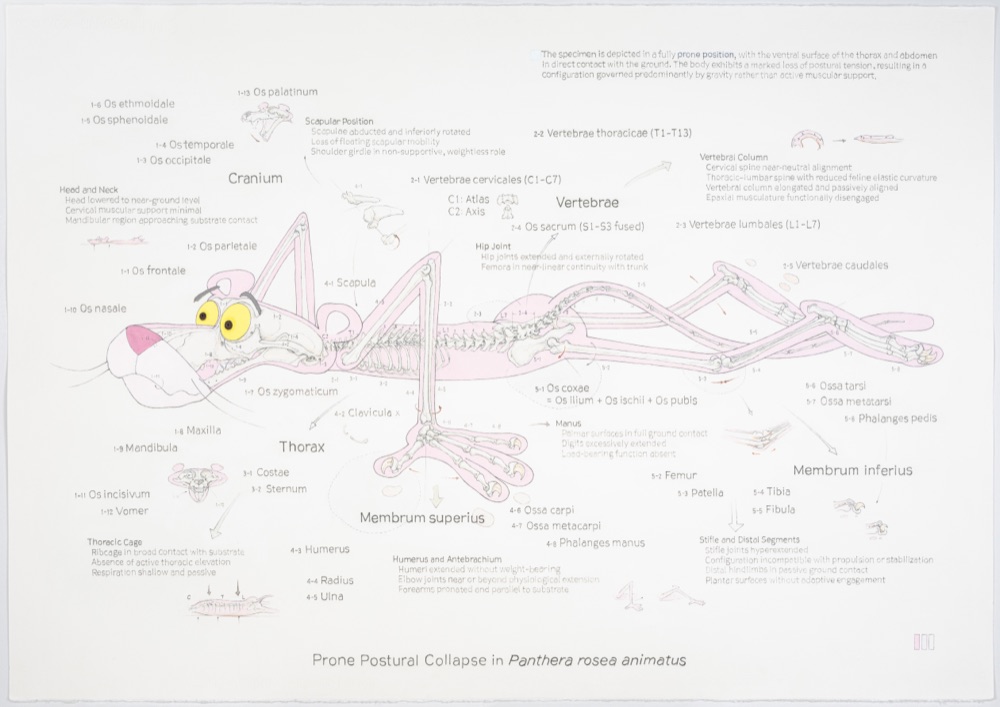
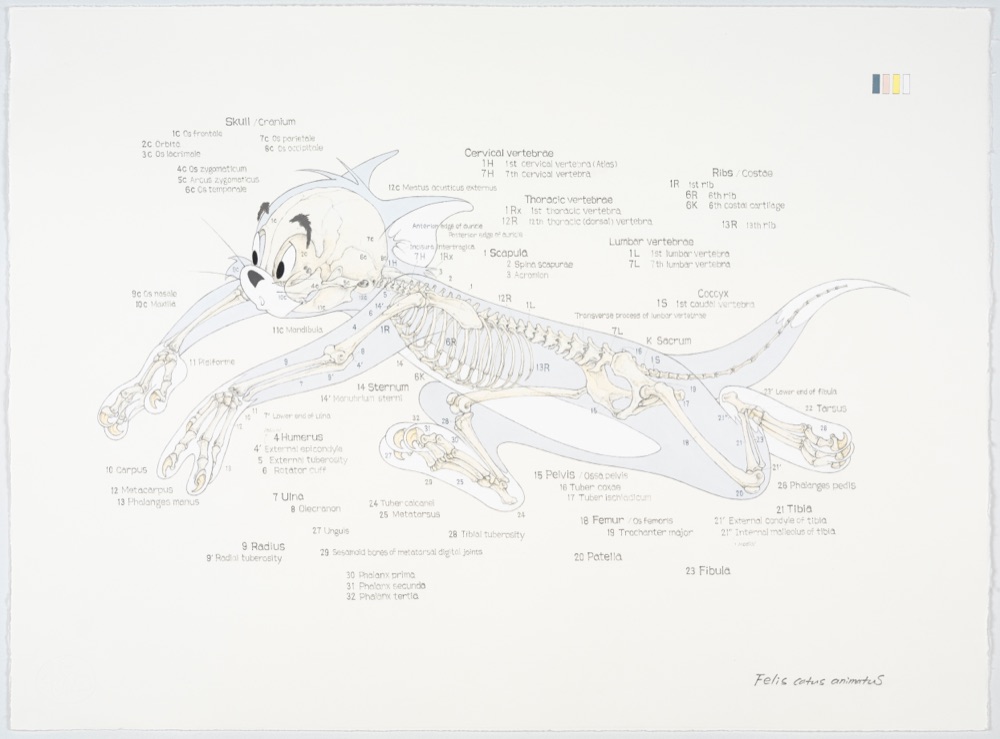
The two works from the 《ANIMATUS》 series presented here are drawings that analyze and document the bodies of virtual characters in anatomical iconography. What I attended to most was securing the highest possible image quality with a medium-format camera, so that the texture unique to the flat surface would not be compromised. The image rendered in AR goes beyond the physical distance and lighting constraints of viewing the actual work; it can be magnified and examined in even finer detail than the original. Delicate pencil lines and anatomical notations that the naked eye could hardly capture come into view.
▷ What do you hope viewers feel in front of it?
I hope they will take as much time as they wish, looking closely as if the work were theirs alone, and enjoy the pleasure of observation. Between the intricate lines remain human traces: marks of repeated erasing and refining, and lettering that looks as though printed in a font but was in fact written out stroke by stroke. I hope it becomes an unexpected experience of discovering the artist’s dogged labor and the trajectory of time inscribed on the paper.