


Plane: Sculptural Language
2026. 9. 10 – 10. 15 | [GALLERIES] SONG ART GALLERY
Um Tai-jung
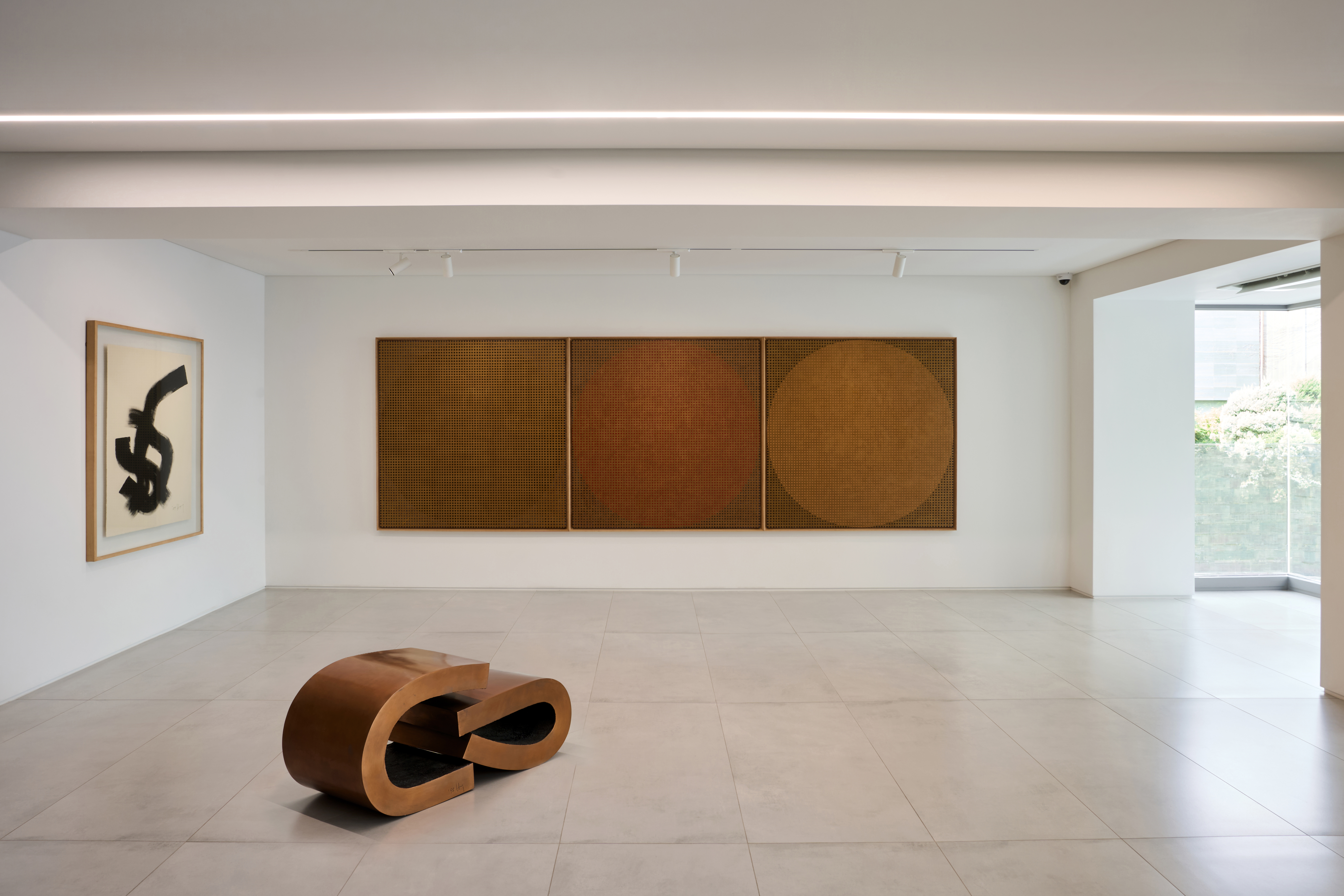
Installation View (1)
The work of Um Tai-jung represents a journey of sculptural contemplation, where the artist uses metal materials to explore the depths, silence, scars, and healing of human existence—along with the possibility of transcendence. A sculpture is an event in which a material comes together with the body of an artist to slowly reveal layers of being that had not been visible before. In that sense, Um’s sculptures are material yet spiritual, abstract yet concrete, silent yet deeply resonant.
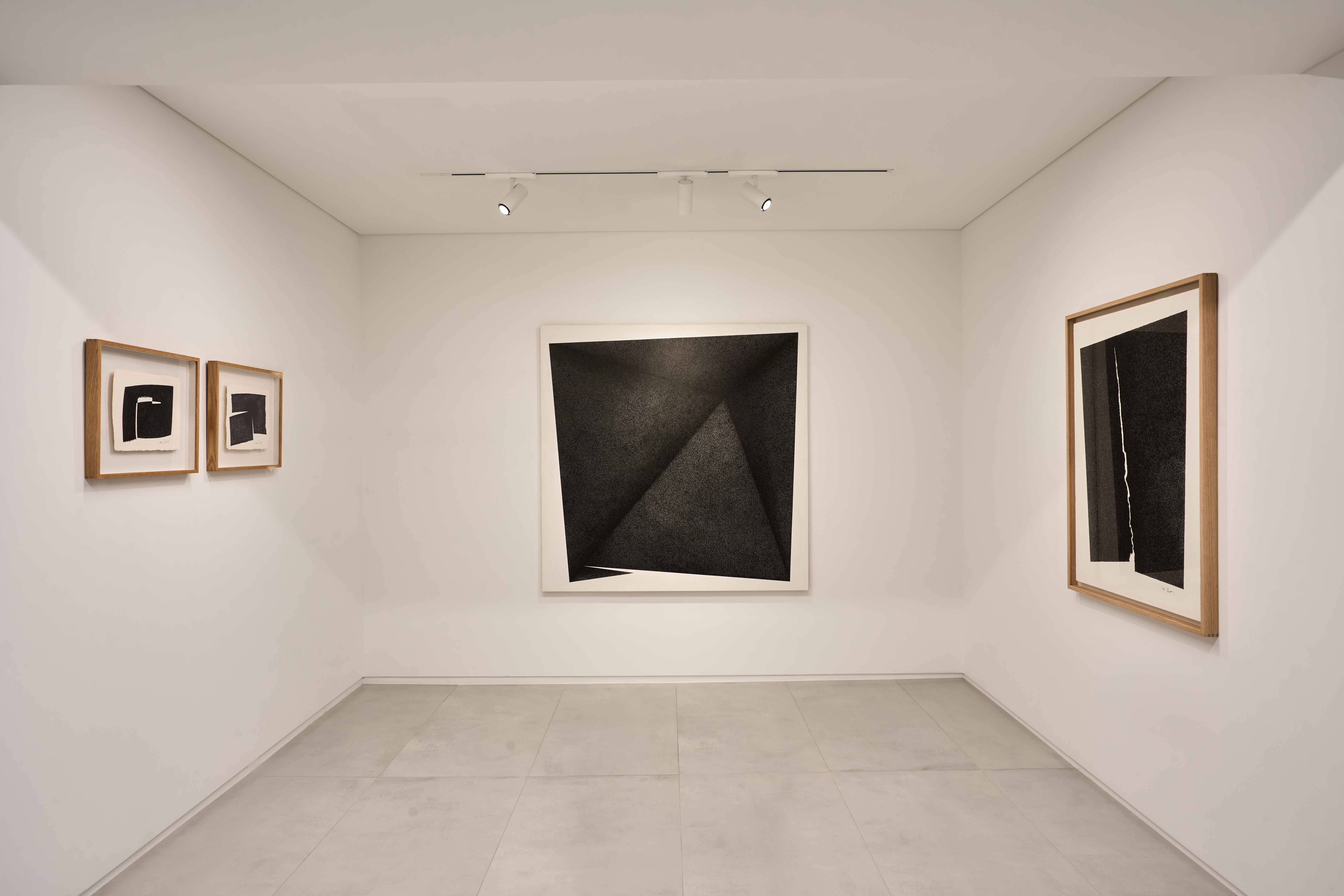
Installation View (2)
To the artist, two-dimensional work is perceived less as an independent genre separate from sculpture than as the result of sculptural thinking’s expansion into a different dimension. The existential questions that his two-dimensional works rest upon are the same as with his sculptures: Questions such as “What is form?” “How is space created?” and “How does matter attain spirituality?” repeat themselves at the two-dimensional level. More than mere image production or color compositions, Um’s two-dimensional works represent a process of using the language of surfaces to explore the same spatial and philosophical ideas addressed in his sculpture.
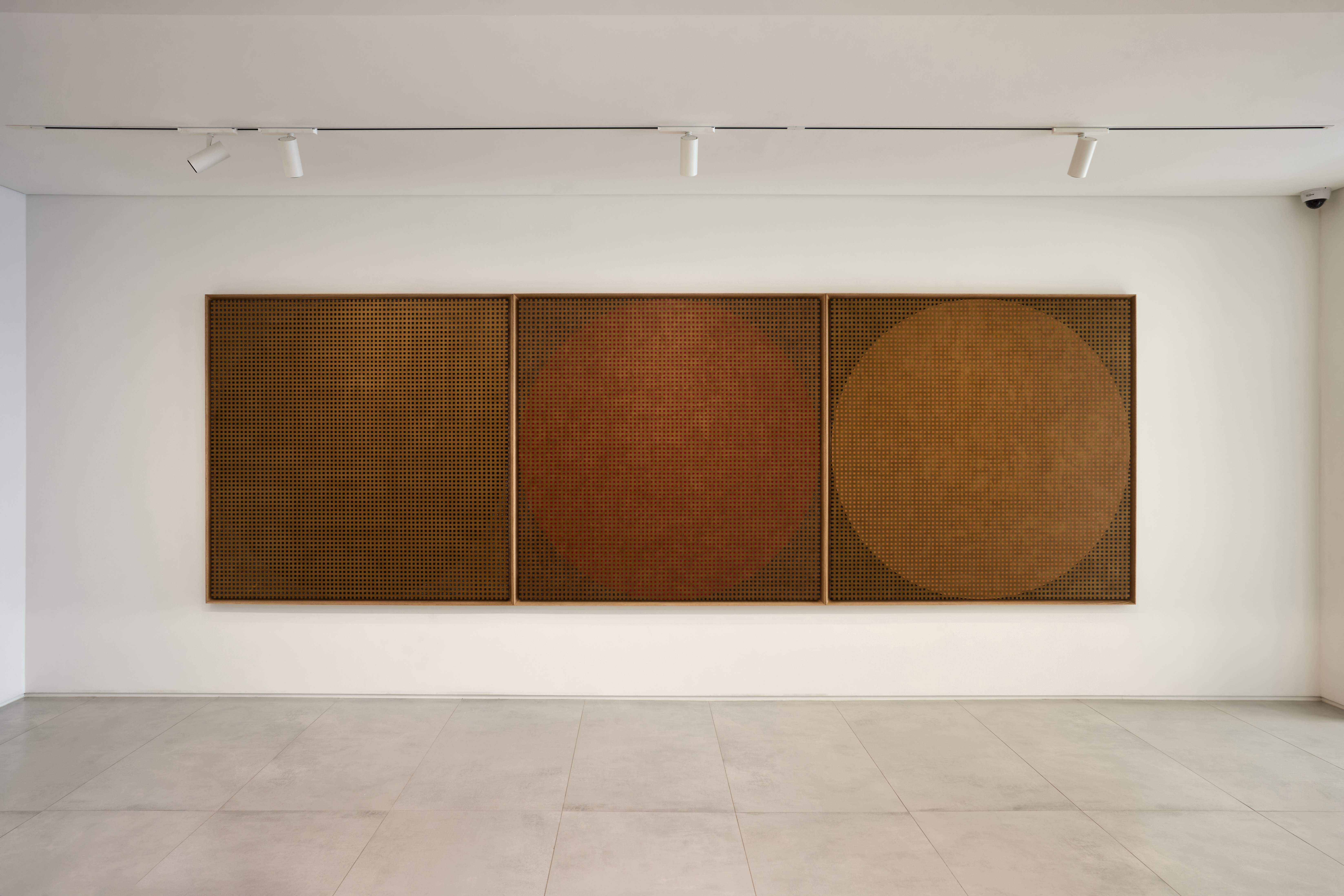
Um Tai jung, Heaven is Round, Earth is Round, and Man is Round, 2018, Acrylic, ink on paper, 145x145cm each, 3 pieces
Repeating structures hold an important place in Um’s two-dimensional work. This repetition is more than mere patterns and decorative rhythm. It is an accumulation of performative time, a process in which form is constantly interrogating itself. The lines on the canvas connect in regular ways; the points and surfaces are repeated while maintaining minute differences. Yet the repetition here is not a mechanical replication. The more repetition there is, the more the subtle differences, discrepancies, and rhythms show themselves. In this sense, Um’s work bears close connections to Eastern performativity. Just as a Zen Buddhist monk achieves internal concentration through repeated movements, Um’s canvases access a spirituality beyond form through their repetition.
Um Tai jung, Endless Column 무한주, 2018, Acrylic, ink on kraft paper, 145x145cm
Um’s repetition is less a cold, geometric order than a flow of living rhythms and being.
Um Tai jung, Untitled 2003-5, 2003, Ink on paper, 145x145cm
Where his sculpture reveals the tensions of existence through the cutting and welding of metal, empty spaces, and vertical structures, his two-dimensional images create the same tension on the surface through lines, planes, gaps, and repetition. Much like the emptiness that is an important aspect of his sculpture, the gaps in his two-dimensional work are not simply empty spaces. They are potential spaces—spaces of silence and breathing, where forms emerge and disappear. Not simply backgrounds that sustain forms, the gaps on the canvas harbor as much existential weight as those forms.
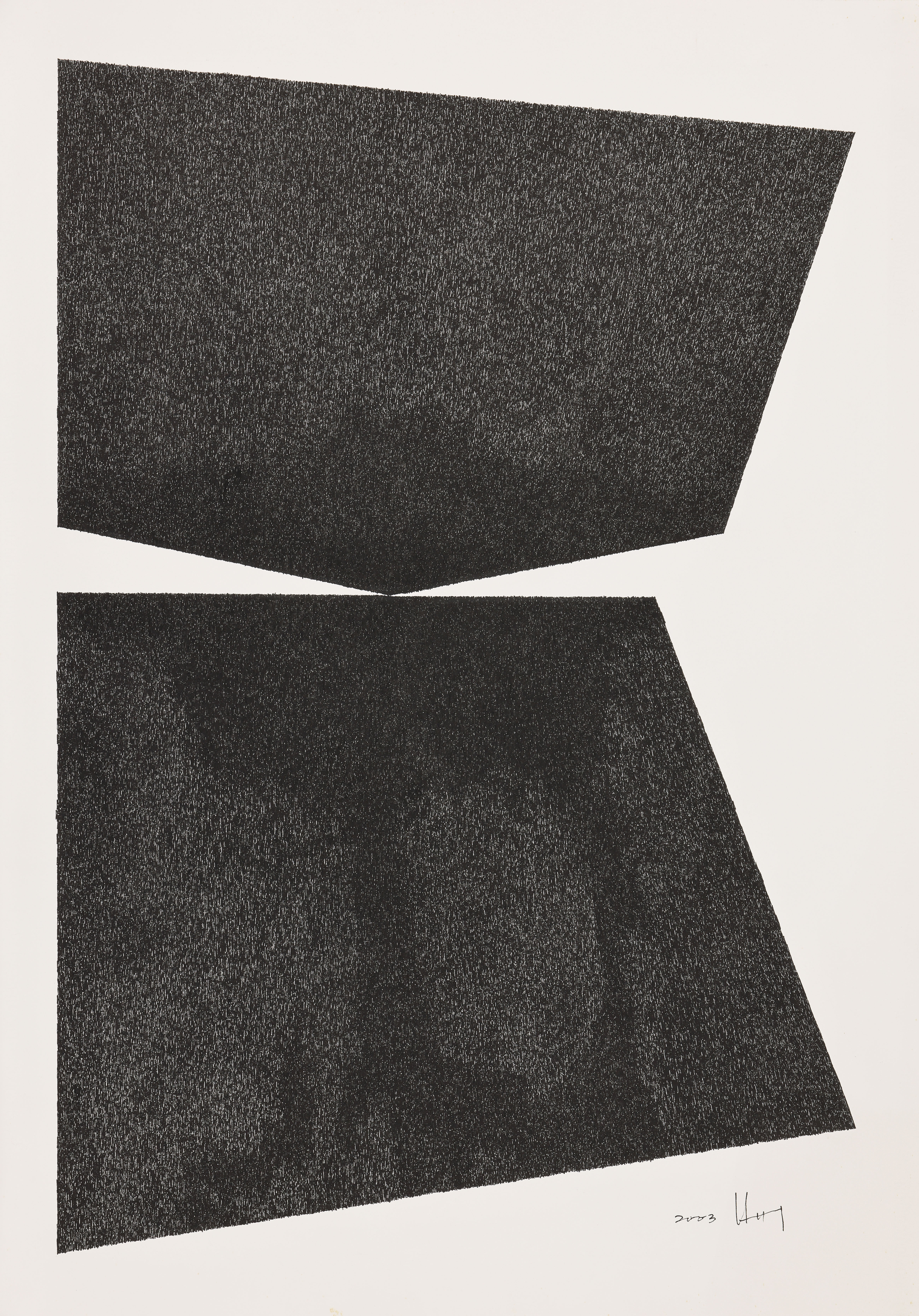
Um Tai jung, Drawing-Silence, 2003, Ink on paper, 100x70cm
Um’s two-dimensional works also retain a sculptural sense with regard to light and depth. The lines and planes on his canvases are more than mere two-dimensional images; they harbor the spatial depth of reliefs. Repeating structures create visual vibrations, and the viewer’s gaze does not simply pass over the canvas—it sinks inside it. The surface here is not a window open to the world or a representational medium reflecting the outside. Instead, it is a field, a structure of energy.
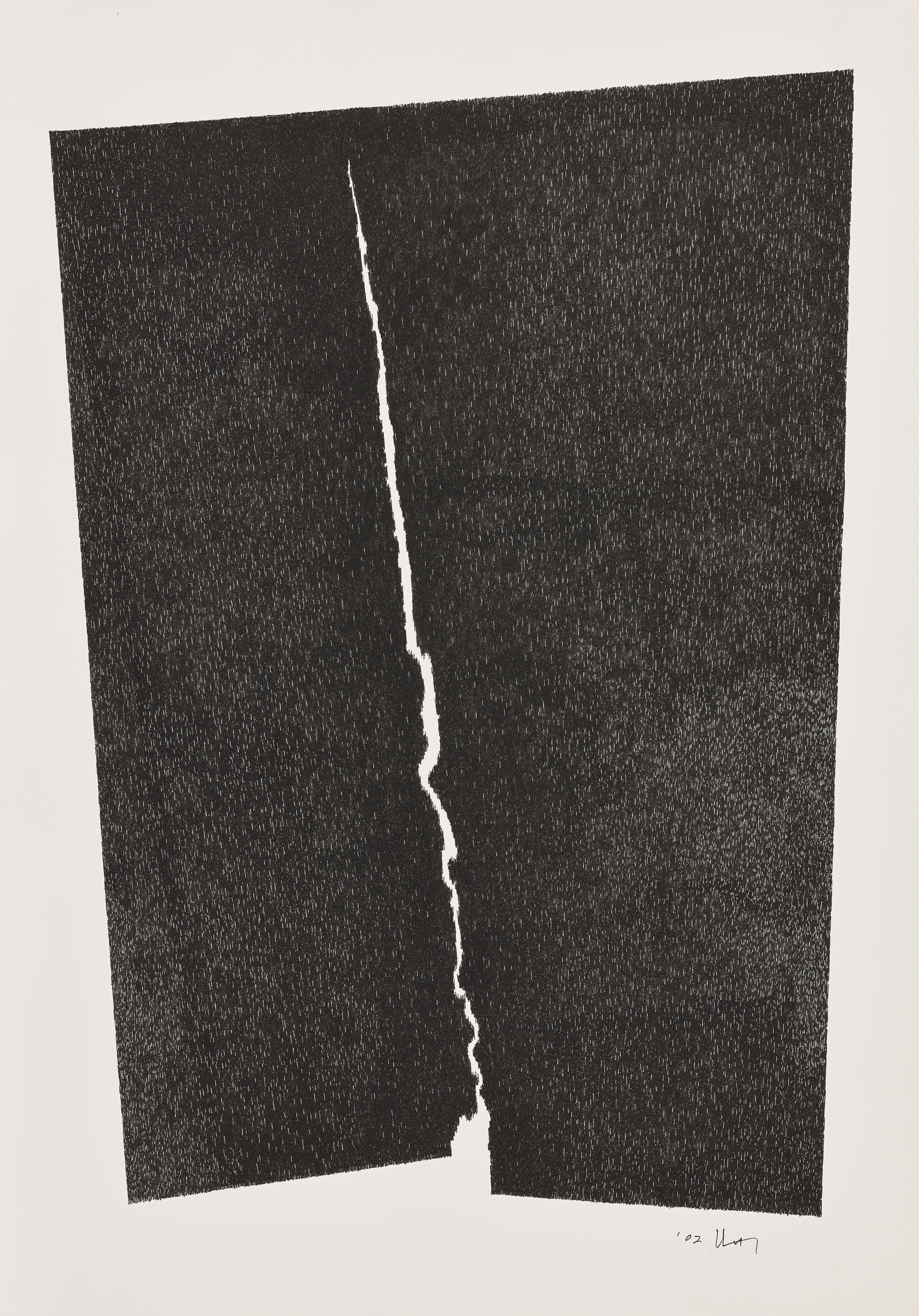
Um Tai jung, Drawing-Silence, 2002, Ink on paper, 100x70cm
Ultimately, Um’s two-dimensional and sculpture works rest on the same philosophical foundation. They are attempts to access non-form by way of form—explorations that use material to reach immaterial depths. Where his sculptures lift up the weight of being within space, his two-dimensional works endlessly repeat and expand the resonance and breath of that being on the canvas.
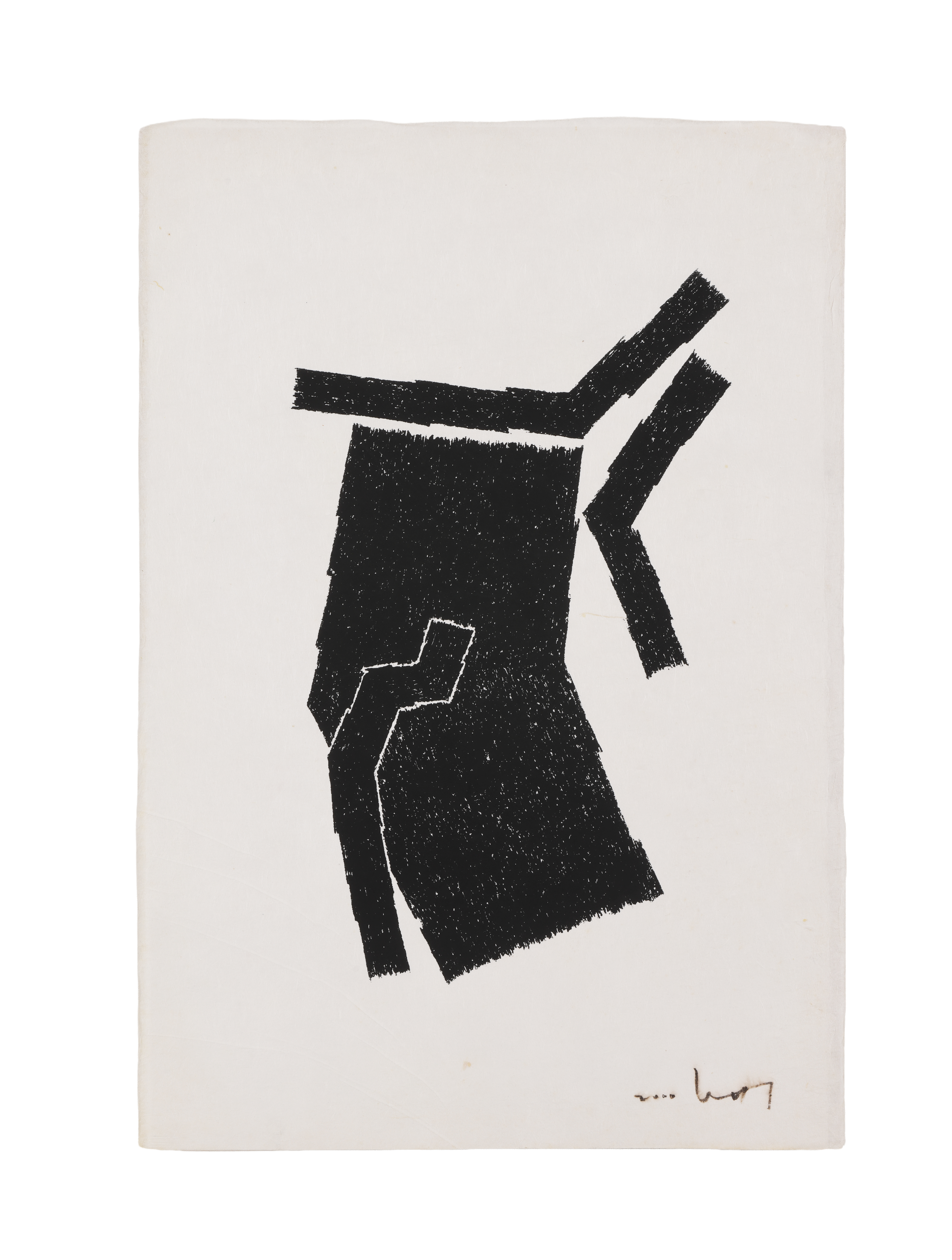
Um Tai jung, Drawing-Silence-Sound, 2000, Ink on paper, 40x27cm
To Um, sculpture is a way of raising a presence up to the world. It is both the revelation of the unseen.
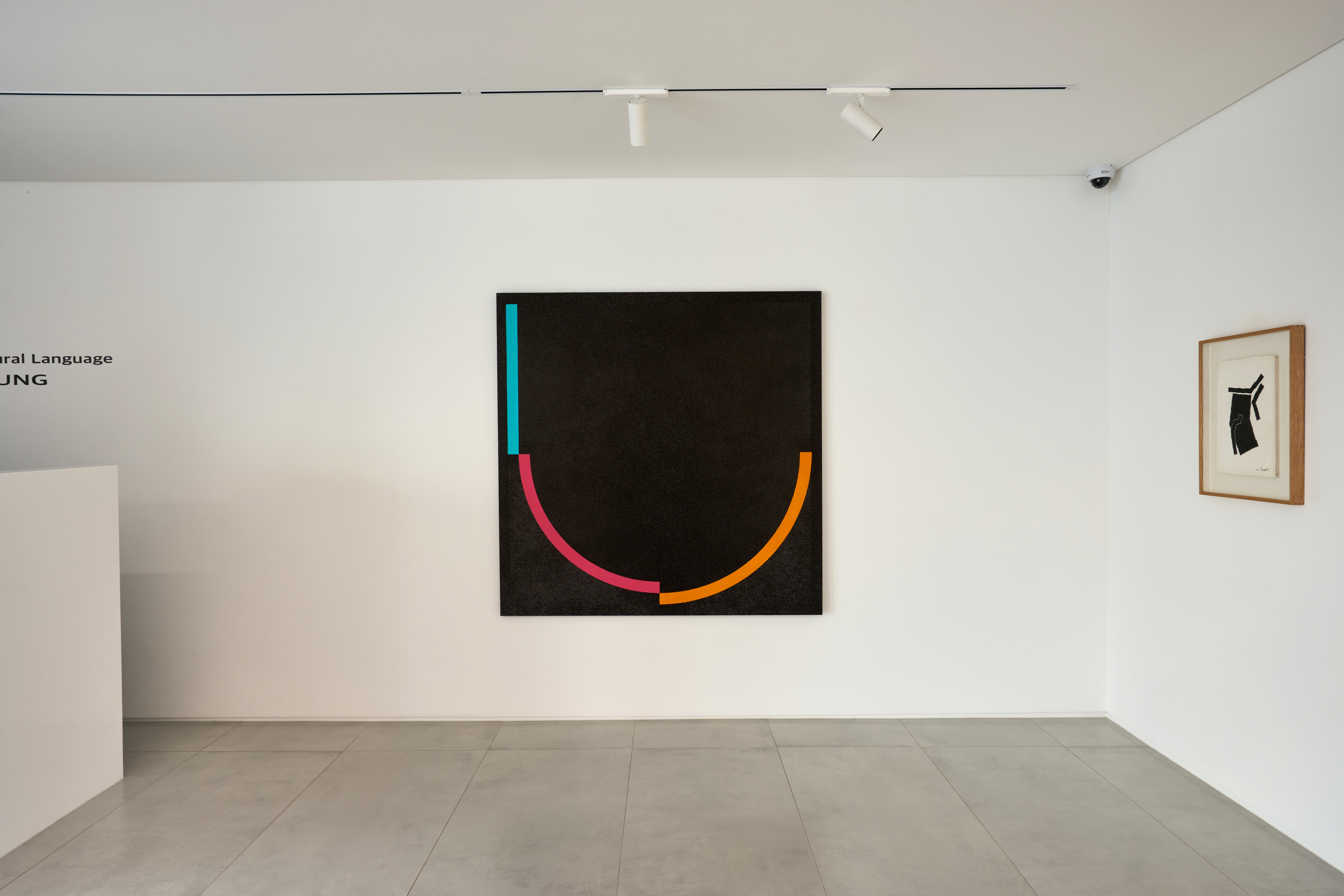
Installation View (3)
「“Sculpture Means Building a World”: The Abstract Sculptures and Artistic Philosophy of Um Tai-Jung」
Kim Seok-mo, Doctor of Philosophy (Former Director, Sorol Art Museum)
Exhibition Venue:
M&SONG ART
23 Dosan-daero 27-gil, Gangnam-gu, Seoul, 06032, Republic of Korea
82 2 543 0543
Song Art Gallery
Acrovista Arcade, 188, Seochojungang-ro, Seocho-gu, Seoul, 06600, Republic of Korea
82 2 3482 7096
[GALLERIES] SONG ART GALLERY
- Dates
- 2026. 9. 10 – 10. 15
MORE LIKE THIS


