


Immaterial: What Remains
2026. 2. 28 – 3. 28 | [GALLERIES] GALLERY MAC
Younghwan PARK
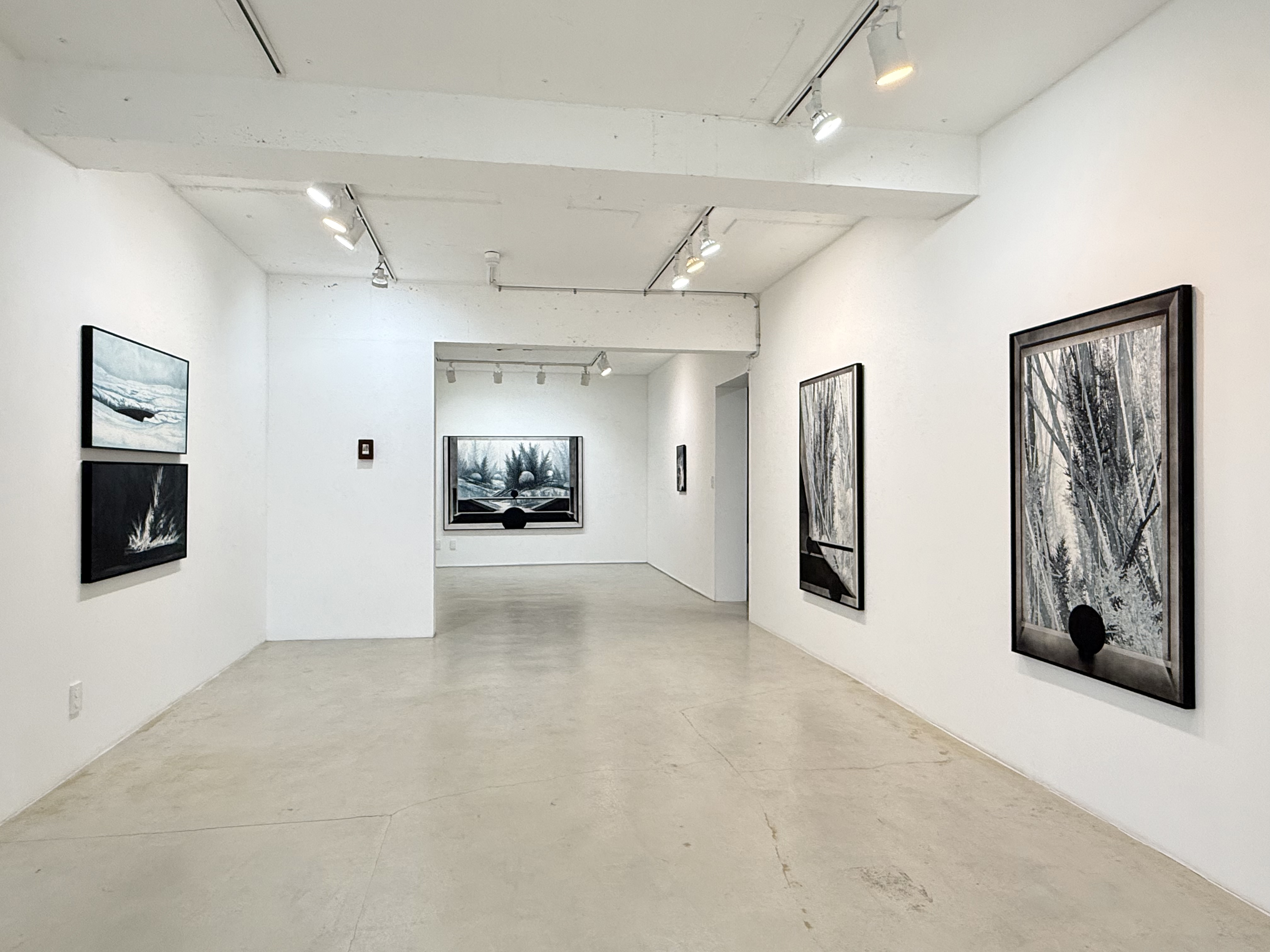
Installation View (1)
In the place where emotions have passed, where once-vivid thoughts gradually lose their brightness, and where events sink into the layered strata of time — we are finally compelled to ask: What remains?
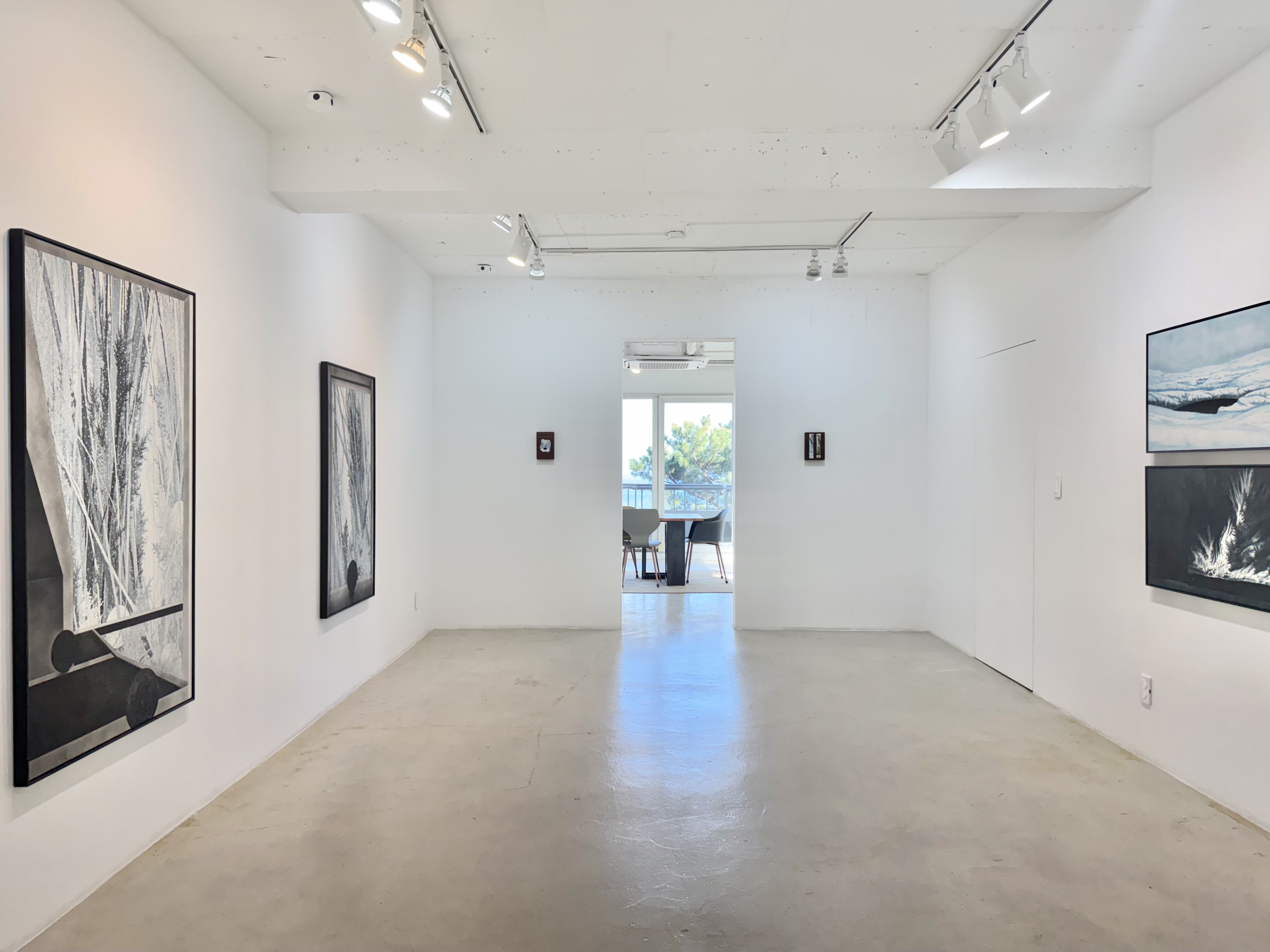
Installation View (2)
Park Younghwan’s solo exhibition《Immaterial: What Remains》begins with a question about a certain sensation that does not fully disappear even after vanishing, about a density of time that persists even after form dissolves. Rather than focusing on the image that remains on the surface, the artist gazes at the condition that continues to operate in the wake of its passing.
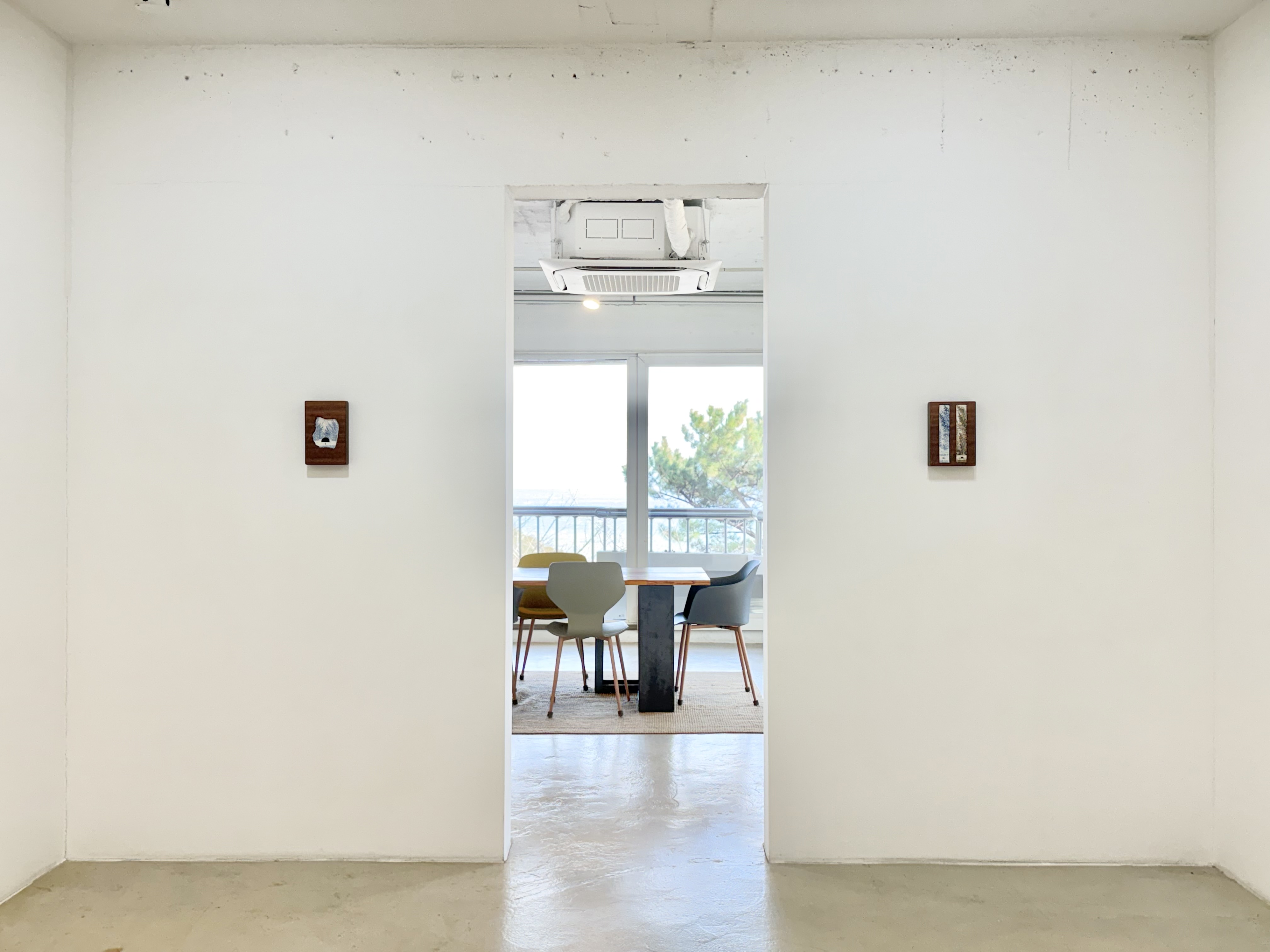
Installation View (3)
Trained in Korean painting and working primarily with ink and hanji (traditional Korean paper), Park’s practice clearly distances itself from the representational conventions and compositional order of traditional East Asian painting. The black spheres that appear in his works are placed heterogeneously within landscapes or architectural spaces, disrupting the habitual logic of scenery. These spheres are not merely formal elements; within the artist’s narrative, they function as condensed units of present experiences, emotions, thoughts, and events. As their color lightens, they point toward memories and feelings in the process of volatilizing. The canvas becomes less a site for depicting objects than a field for visualizing the density in which emotion and time settle.
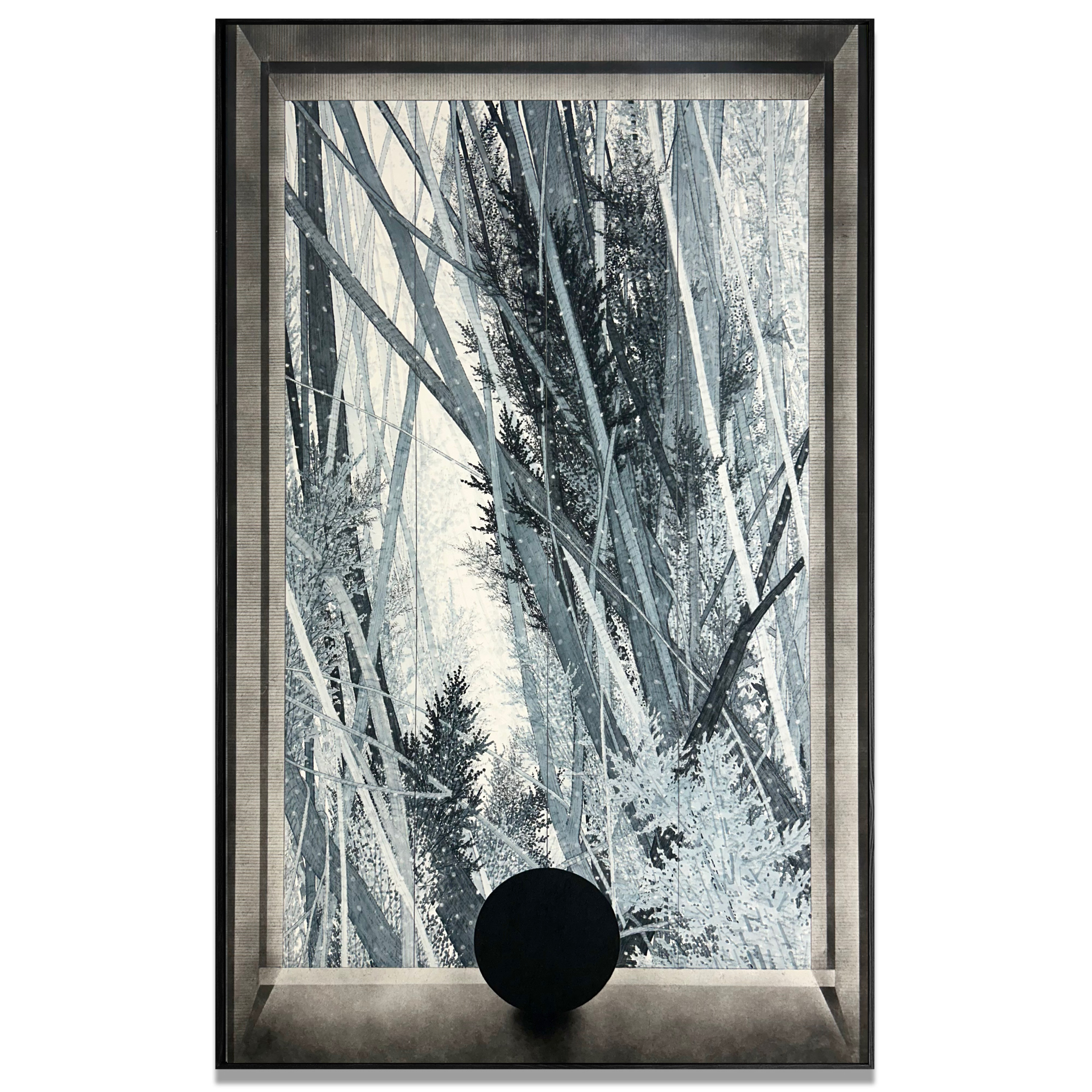
반추, 2026, 한지에 먹, 130.3×80.3cm
Ink seeps and spreads into hanji, destabilizing rather than fixing form. Holding within it the simultaneous potential for accumulation, diffusion, and erasure, this material resonates with the artist’s interest in “immateriality.” Here, immateriality does not imply the negation of matter, but rather a state not confined or fixed by it. The forms on the surface are visually striking, yet what they ultimately indicate is not the shape itself, but the flow of time and emotion condensed within it.
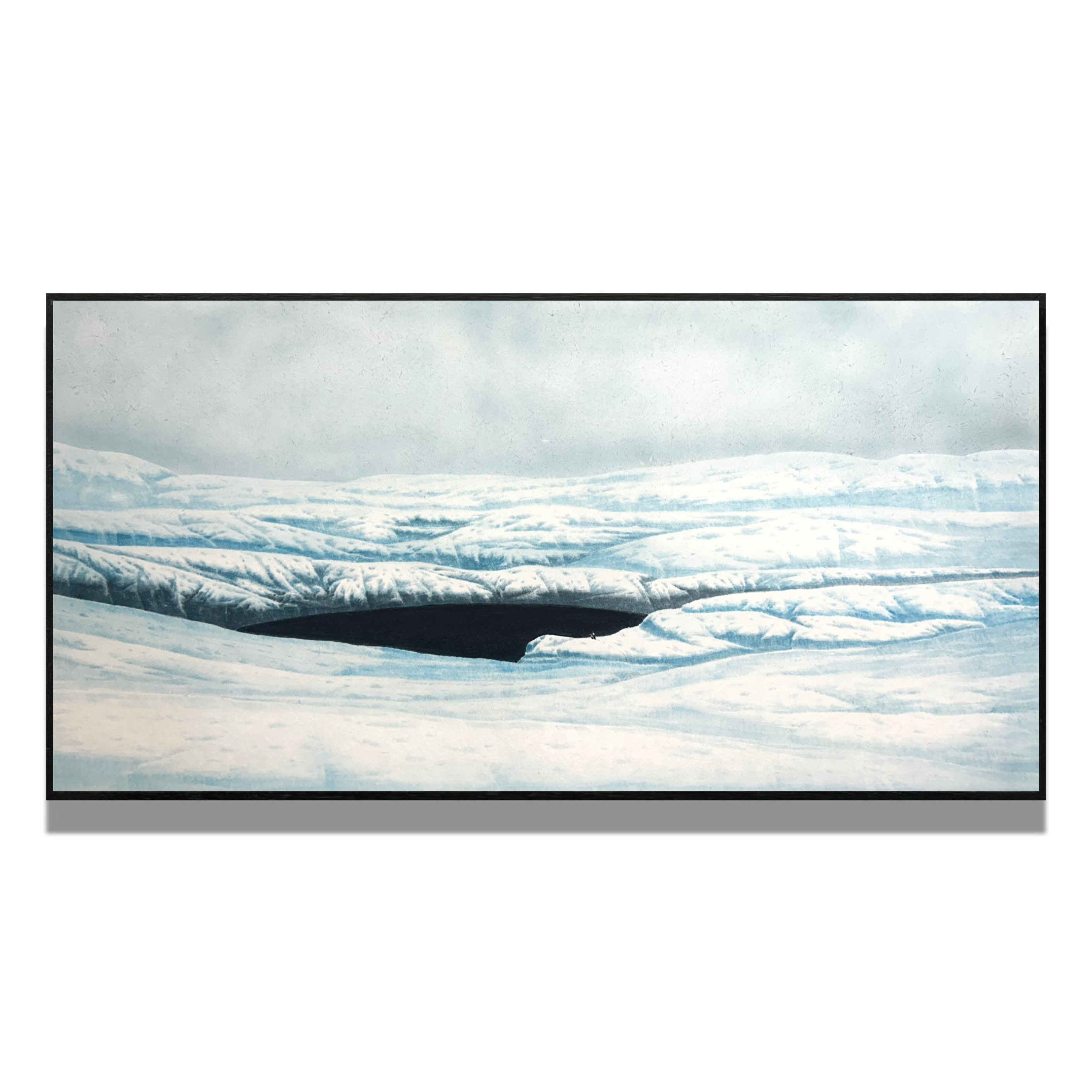
우리의, 2026, 한지에 먹, 50x100cm
Alongside his paintings, Park has previously extended his practice into performance rooted in painterly gestures. Movements of the body originating from the canvas served to expand the act of painting into lived time. His paintings retain a latent performative sensibility: the repetitive acts of applying, layering, and erasing ink reveal time as process rather than presenting image as result. The painting is not a completed object, but a state that continues to vibrate where an event has passed.
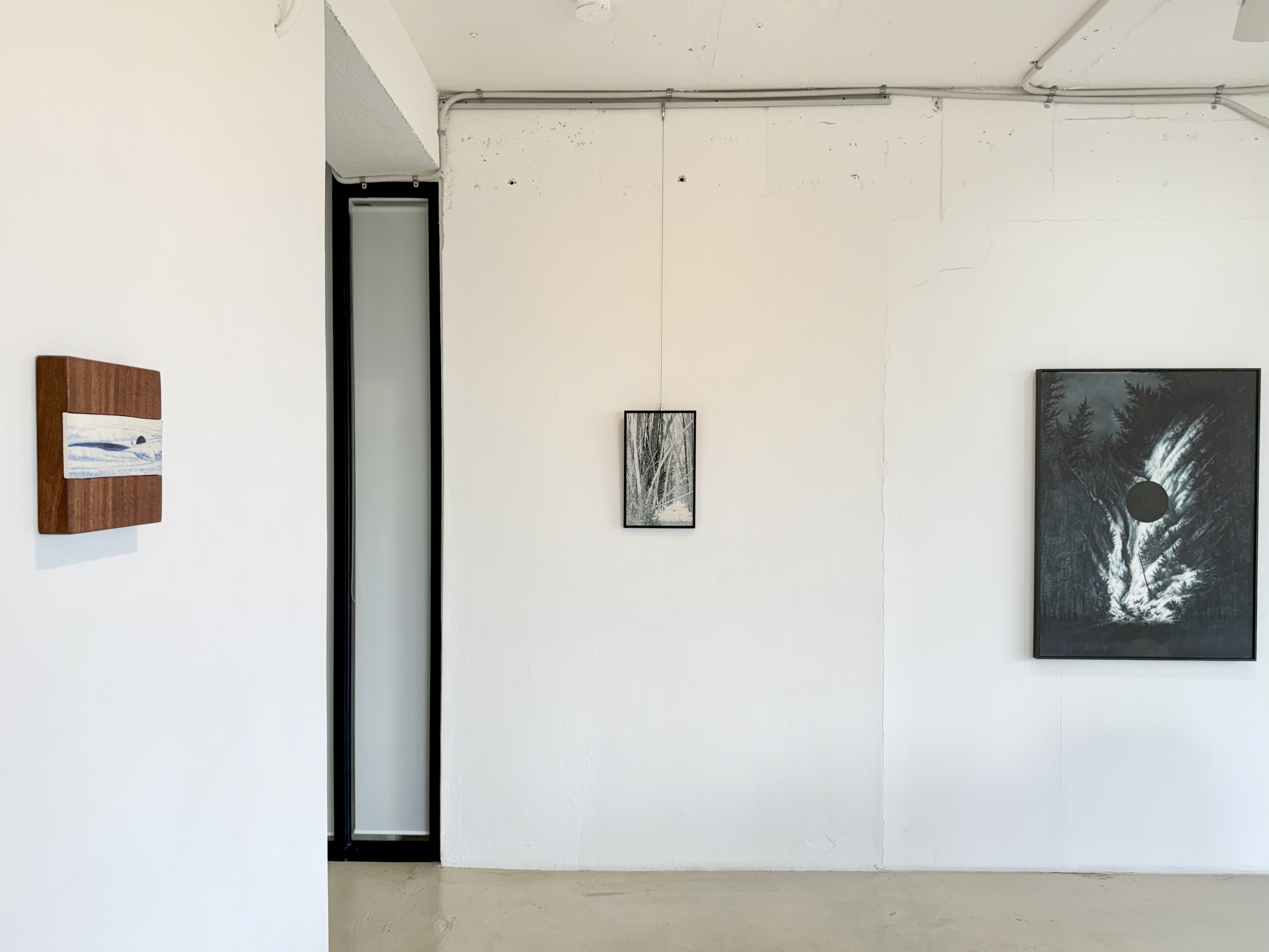 Installation View (4)
The ceramic panel works presented in this exhibition further expand this inquiry into another dimension. Drawn upon clay and transformed through fire, these works rearticulate the relationship between time and material. Though the surface appears fixed after passing through the event of fire, traces of diffusion and condensation remain embedded within it. Emotions that seemed destined to disappear are transposed into another form; volatilized memories persist beneath the surface.
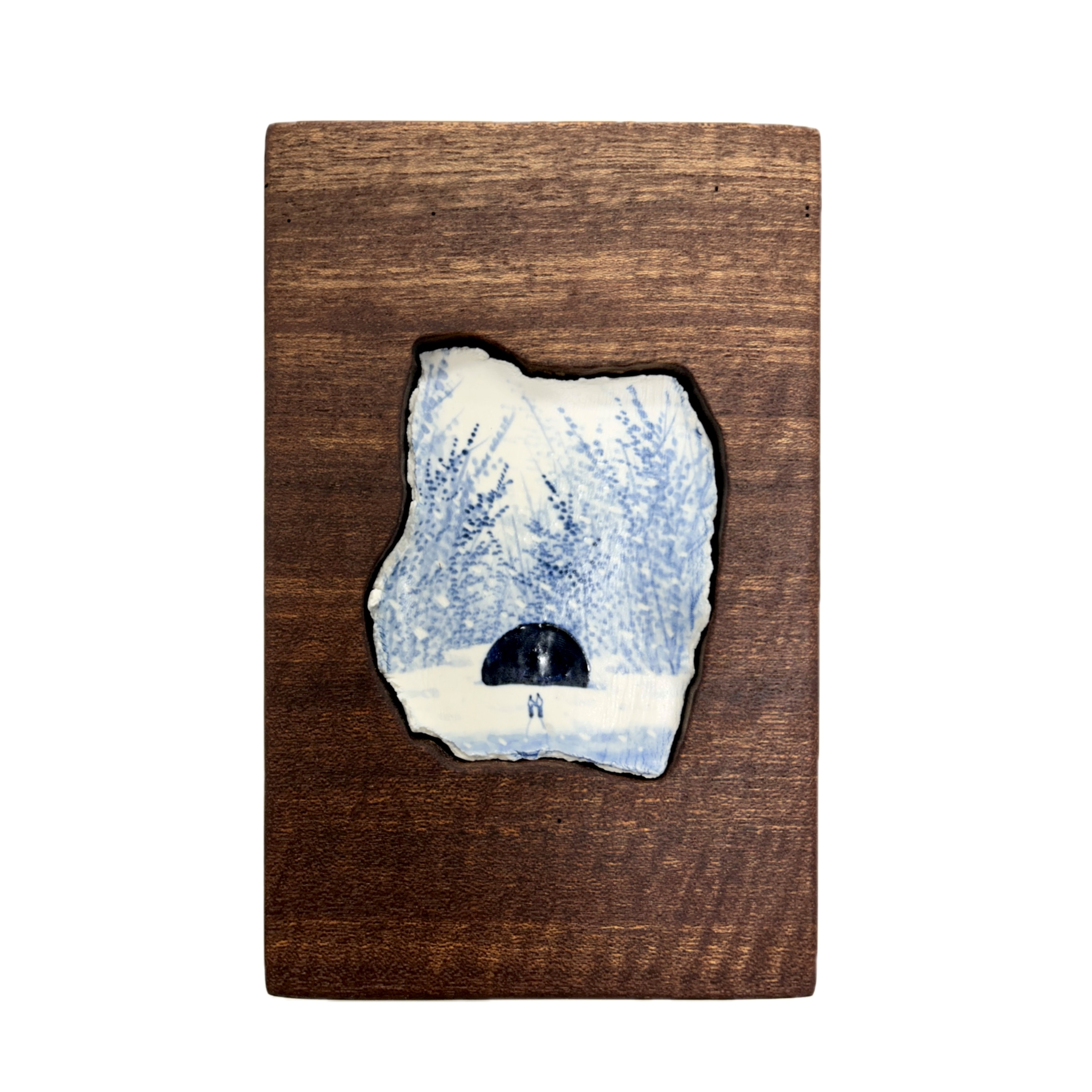
우리, 2026, 청화백자에 나무프레임, 21.6×13.7cm
The artist senses that his practice is currently undergoing a period of transition. Standing upon an established visual language, yet refusing to remain within repetition, he re-questions its very conditions. The black spheres still inhabit the surface, but the spaces, densities, and relational structures they enter are subtly shifting. This exhibition is less a definitive statement than a site where change becomes visible in process.
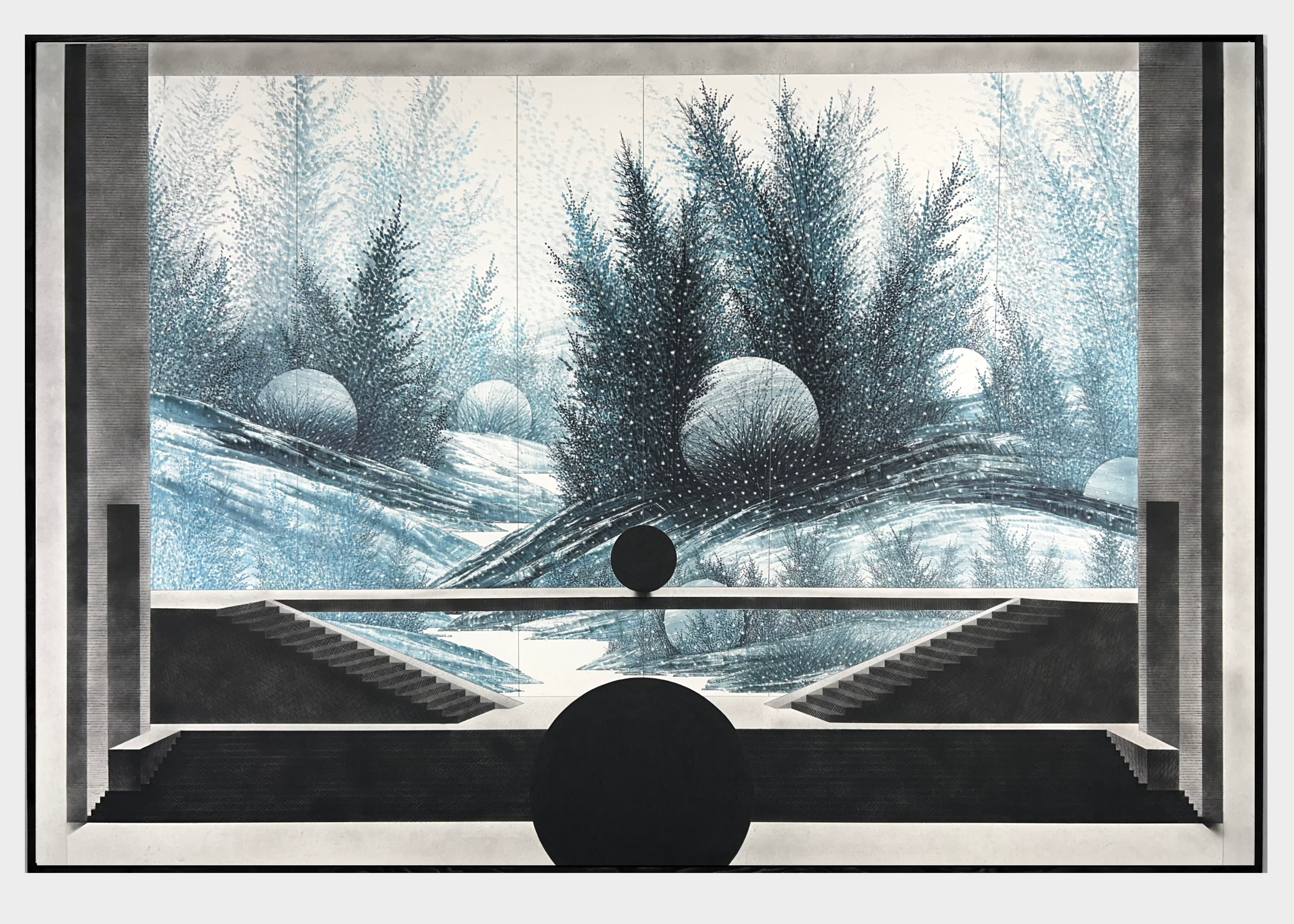
회고, 2025, 한지에 먹, 130.3×193.9cm
In 《Immaterial: What Remains》, what remains cannot be reduced to material substance. It is the trace that lingers after emotion has faded, the state of inquiry that an artist continues to hold as he moves through his own language. Even if the sphere on the surface gradually fades, the time that has passed through it cannot be erased. What remains is not form, but the density of sensation and memory that made form possible.
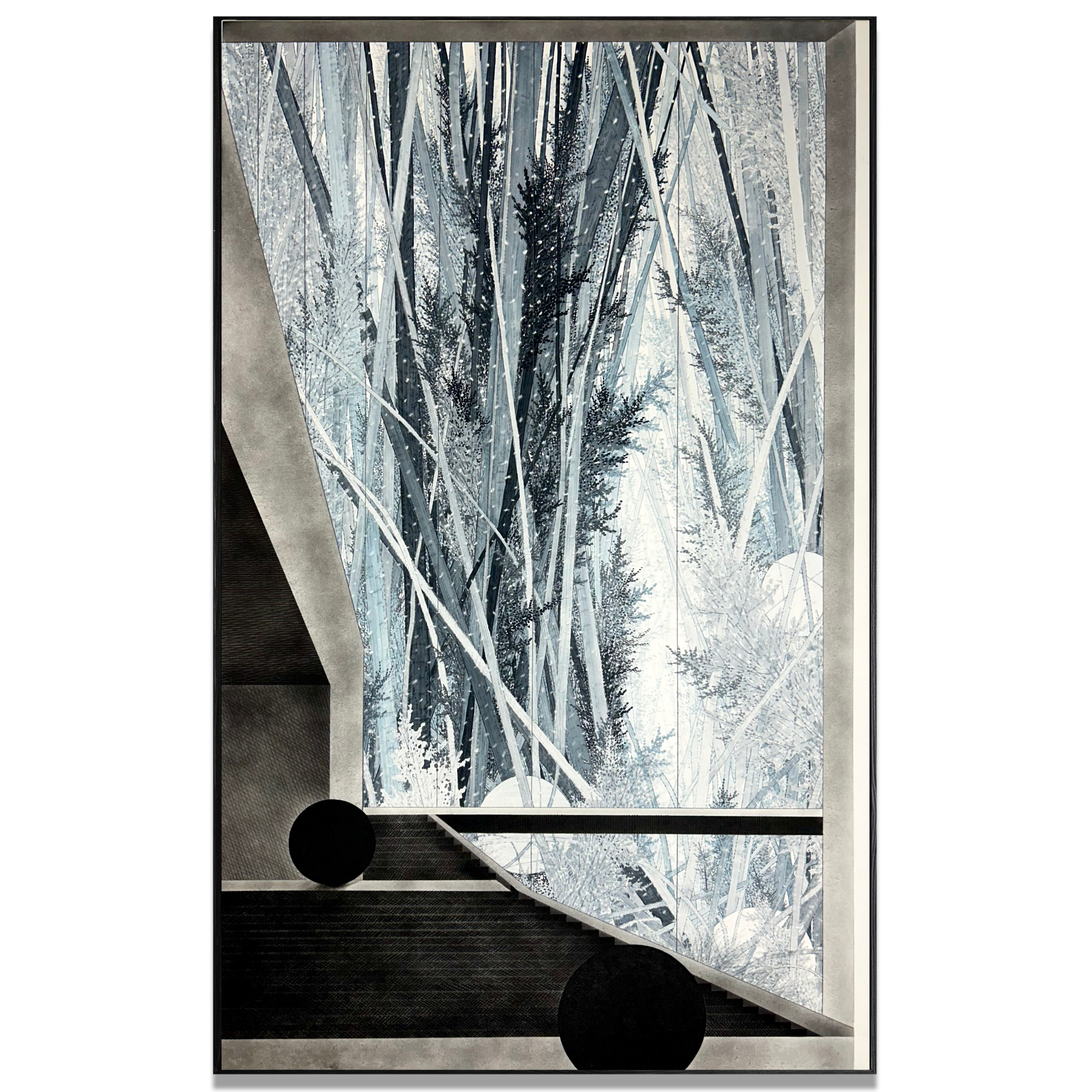
반추, 2026, 한지에 먹, 145.5×89.4cm
This exhibition asks: After experience has passed, after emotion has dissipated, after a body of work has crossed into another phase — what remains? And in that remaining, how does something begin again, here and now?
Share
[GALLERIES] GALLERY MAC
- Dates
- 2026. 2. 28 – 3. 28
MORE LIKE THIS


Share
