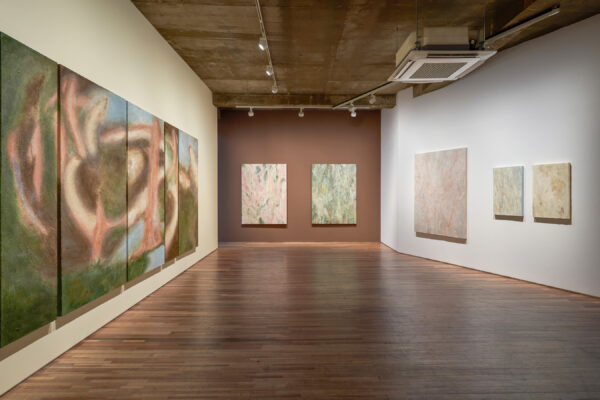
Lim Nosik | Kiaf HIGHLIGHTS 2026 Award Winner
| [INTERVIEW] Kiaf HIGHLIGHTS 2026
Lim Nosik — On Landscapes Shaped by Relationships
Lim Nosik’s practice begins in a small village in his hometown of Yeoju. His paintings emerge from a place where families have worked the same land for generations, long-held traditions are disappearing, and migrant workers have become part of everyday life. From this landscape, he asks whether what we call “tradition” or “landscape” is ever truly fixed.
Through painting, Lim explores landscapes that are continually reshaped through relationships, unsettling the boundaries and ways of seeing that separate people from place, and “us” from “others.”
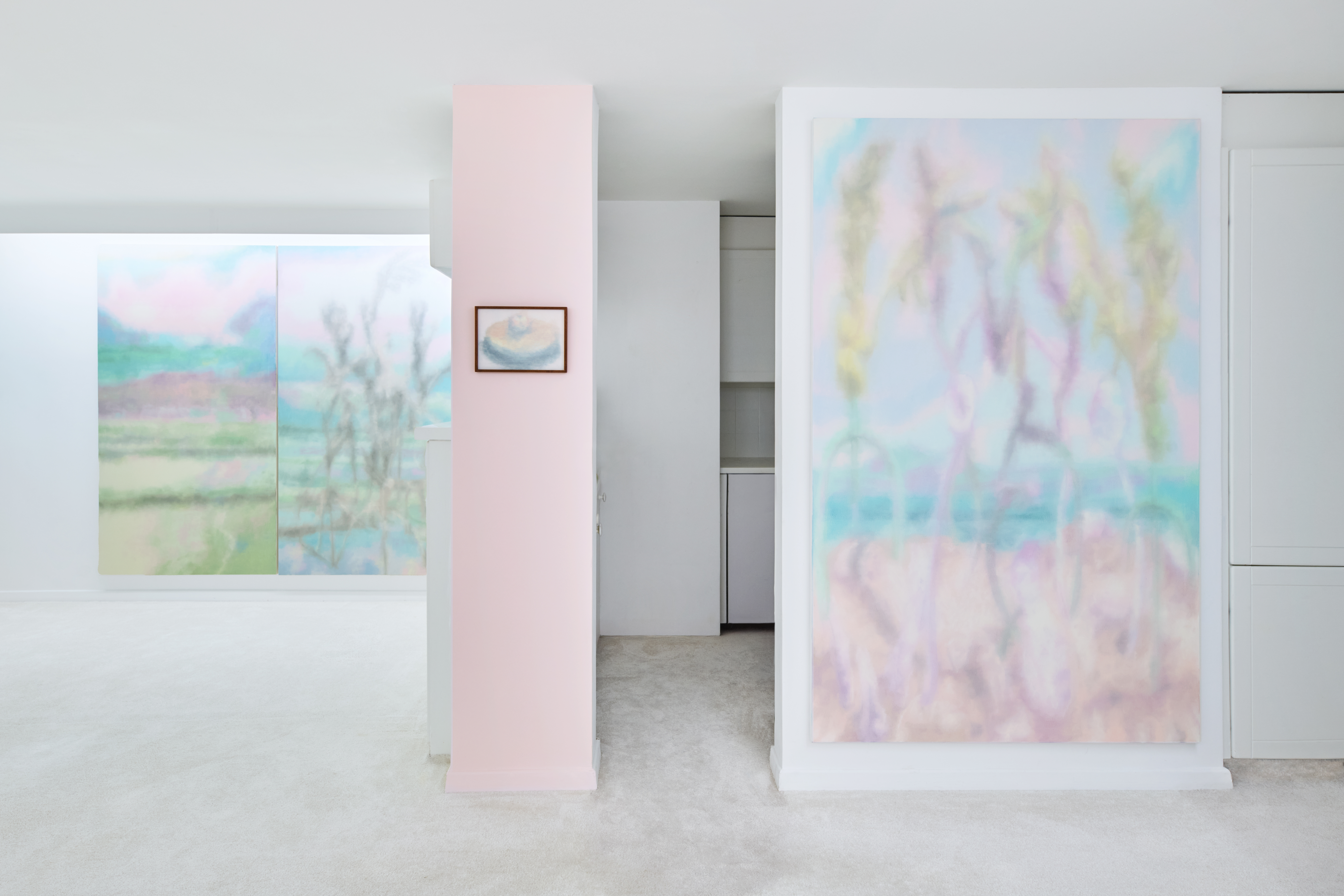 Installation view of Things That Hold by LIM Nosik at Sothu, Zurich, Switzerland.
Courtesy of the artist, Sothu, and Arario Gallery.
Q1. What stories inspired the works you presented at Kiaf SEOUL 2026?
The works I presented at Kiaf SEOUL 2026 began in a small village in my hometown of Yeoju. There are families who have cultivated the same land for generations, and a community in which people share the same surname and are buried in the same ancestral grounds. There are also funeral and farming traditions that are gradually disappearing, as well as migrant workers who have come to work and live alongside the local community.
There is a question I have continued to hold onto while working: Can what exists in the village today still be called “tradition”? I think tradition—or a landscape—is not a completed or fixed form, but something that is continually remade through relationships within a place. Within those relationships, there are always boundaries and ways of seeing that separate “us” from “others.” My work is a process of examining what we call tradition or landscape from within those boundaries and perspectives.
Q2. What themes or questions are you most interested in exploring in your recent work?
The question I have been thinking about most is whether different things can come together to form a single place, and how we perceive those differences.
Even when looking at the same landscape, one person may see their hometown, another a workplace, and someone else unfamiliar ground. Because we tend to see things through names and memories already familiar to us, we readily divide the world into sameness and difference, drawing boundaries between ‘us’ and ‘others.’
That is why I have recently been making paintings in which forms resist settling into a single, fixed image. People and landscapes may merge within the same fields of color, while similar figures appear slightly out of alignment. I want to ask whether those boundaries truly exist, or whether we have simply become accustomed to seeing the world that way.
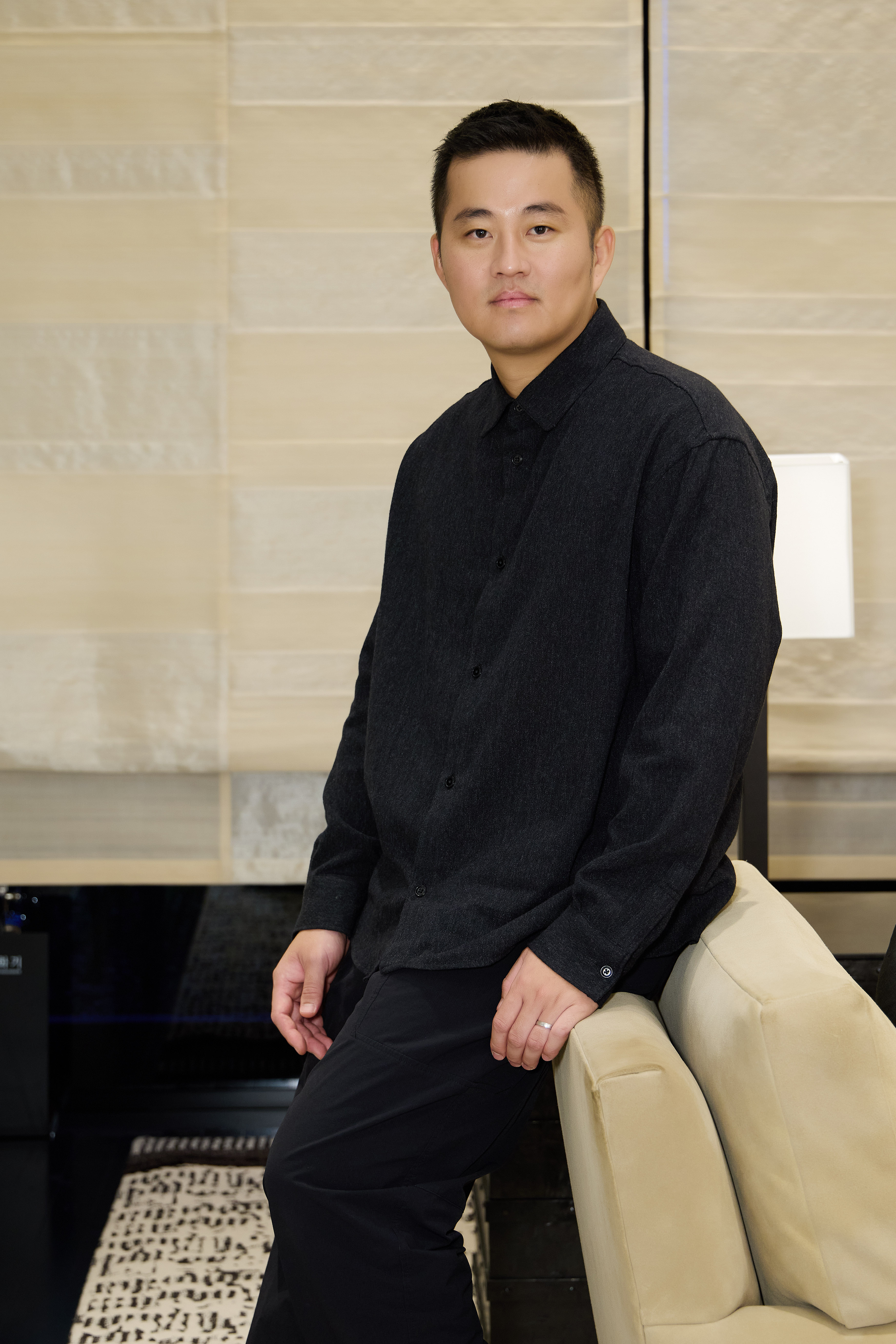 Lim Nosik
Q3. Could you tell us about the direction you hope to take your practice and your upcoming plans?
I would like to continue working while staying close to the places and communities I belong to. As I spend time walking, looking, and gathering, relationships continue to shift, and my paintings change with them.
I think of the picture plane as a site where perception and judgment take shape. On the picture plane, distinctions between what is in front and what is behind, or what is a person and what is a landscape, can easily become unstable. Going forward, I want to explore the picture plane more deeply, allowing that instability to remain on the surface for longer and preventing the viewer’s perception from settling too quickly into a single reading.
In my solo exhibition 𝘏𝘜𝘎 (𝘸𝘰𝘳𝘬𝘪𝘯𝘨 𝘵𝘪𝘵𝘭𝘦) next year, I hope to tell stories about two beings who retain their own bodies and boundaries while supporting, relying on, and living alongside one another. I want to explore relationships among family members, neighbors, and people who have come from far away to live together. I also hope to look at the relationships between tradition and landscape, and between cultures that are disappearing and those that are newly emerging.
Q4. What was it like to meet audiences through Kiaf HIGHLIGHTS 2026?
It was meaningful to share a story that began in a small village with so many people. I hope to continue working hard.
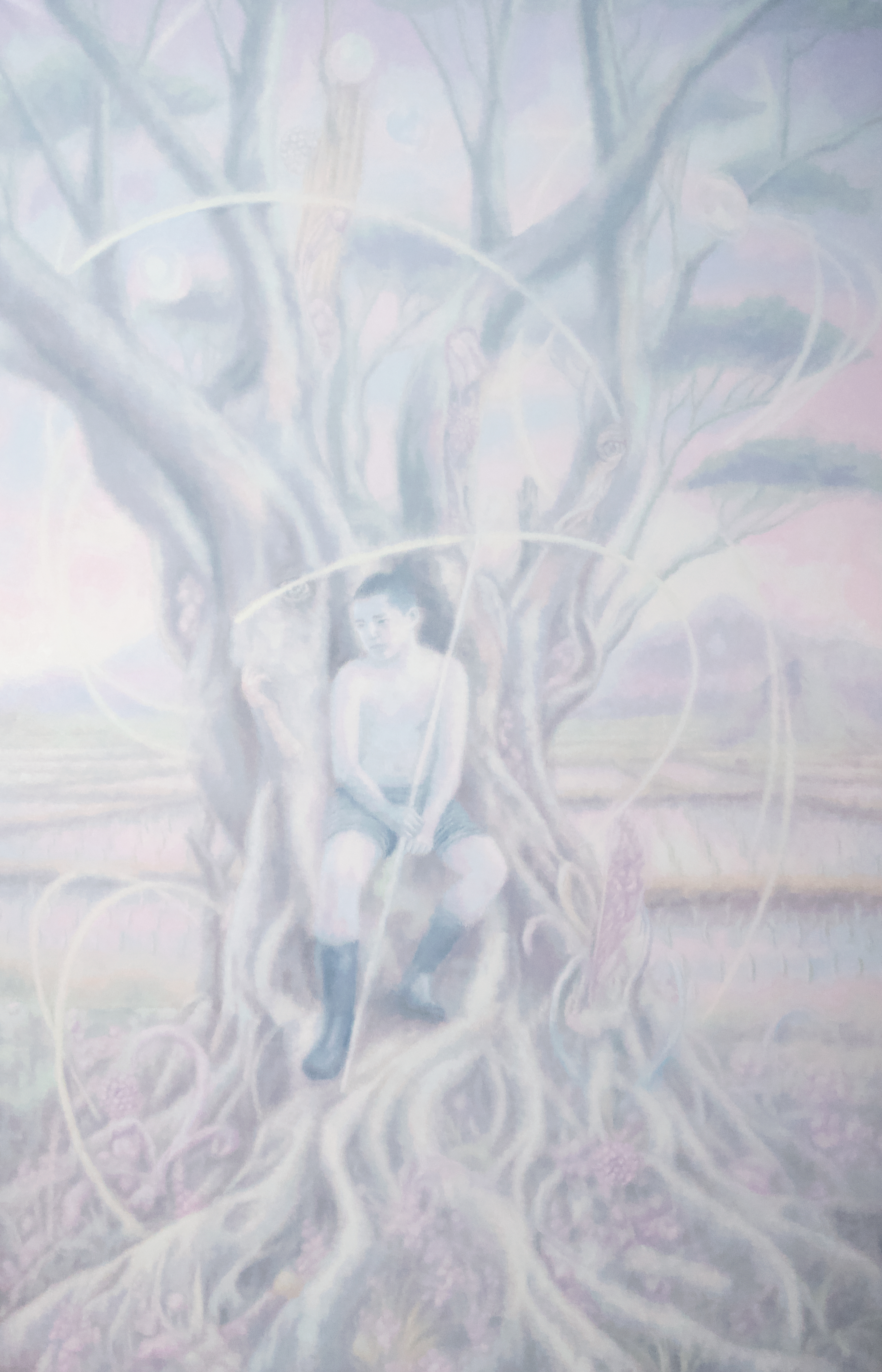 Zelkova Tree – Landscape 71, 2026. Oil on canvas, 200 x 130 cm.
Q5. Finally, is there anything you would like to share with viewers encountering your work?
My paintings tell small stories from a small village. They are stories of the wildflowers and rice plants I have observed over the years, and of the people who live on that land.
I hope viewers can approach the paintings freely. Up close, they blur; from a step back, they come into focus. You can stay with them for a while or simply pass by. Whatever you see is valid.
Some may be reminded of home, while others may see an unfamiliar landscape. I like that difference. I hope my paintings can become a place where you pause for a moment. If each viewer can quietly leave a memory of their own there, that would be enough for me.
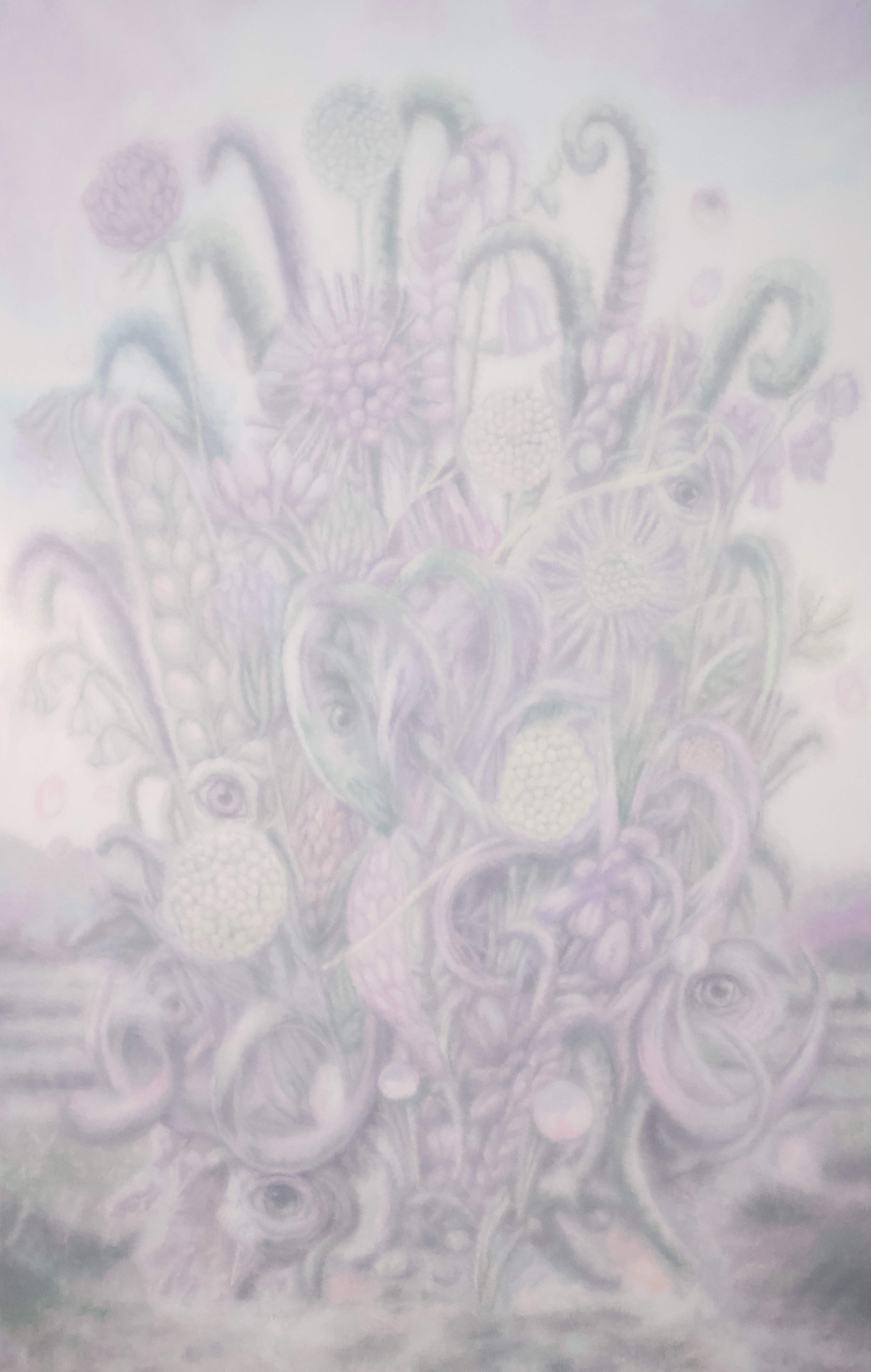 Wildflower – Landscape 70, 2026. Oil on canvas, 200 x 130 cm.
Images: © Lim Nosik. Courtesy of the artist and Arario Gallery.
[INTERVIEW] Kiaf HIGHLIGHTS 2026
MORE LIKE THIS