The Counterpoint of Silence and Openness
2026. 5. 20 – 6. 18 | [GALLERIES] SONG ART GALLERY
Yun Hyong Keun, Choi Insu
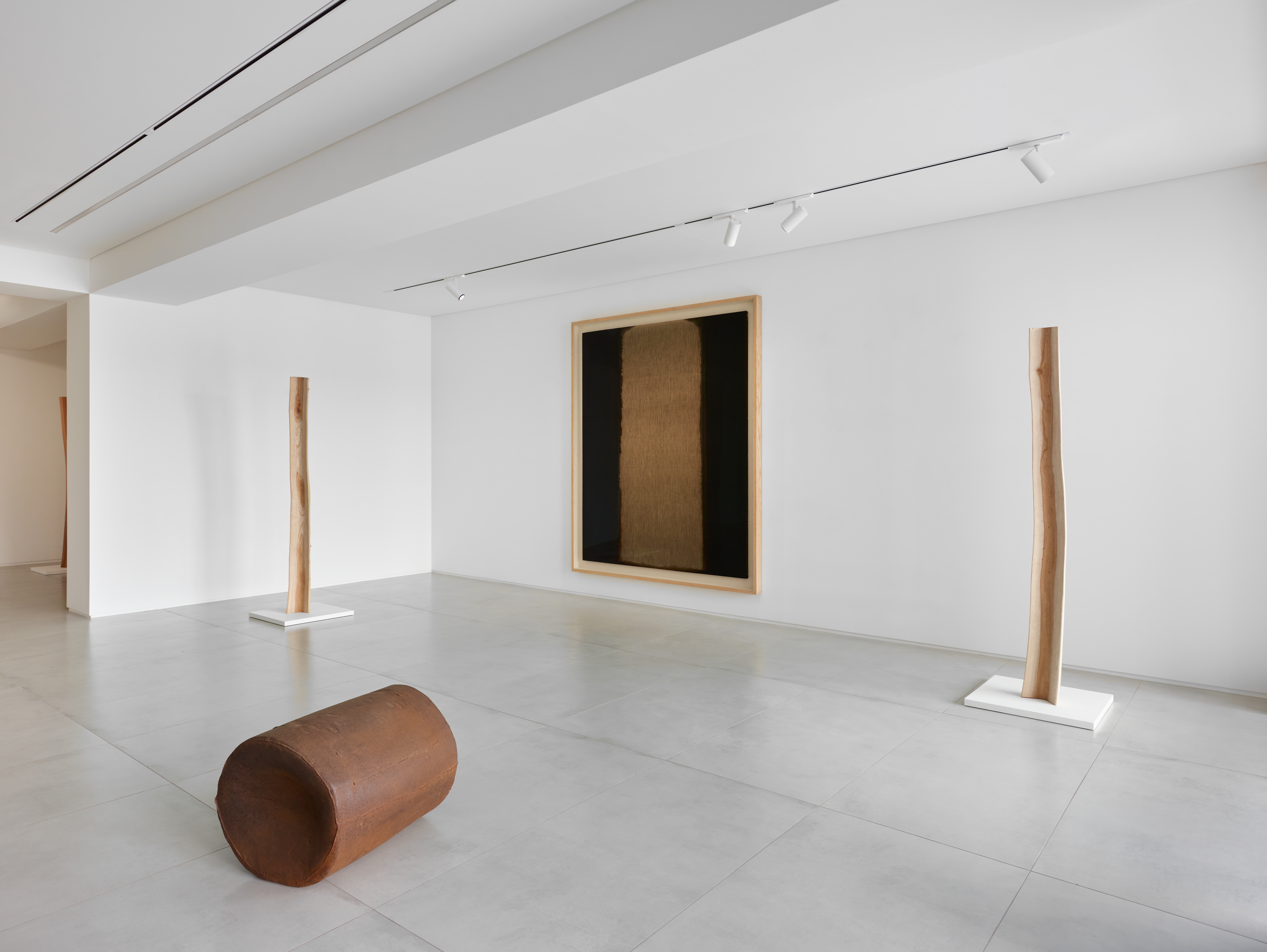
Installation View (1)
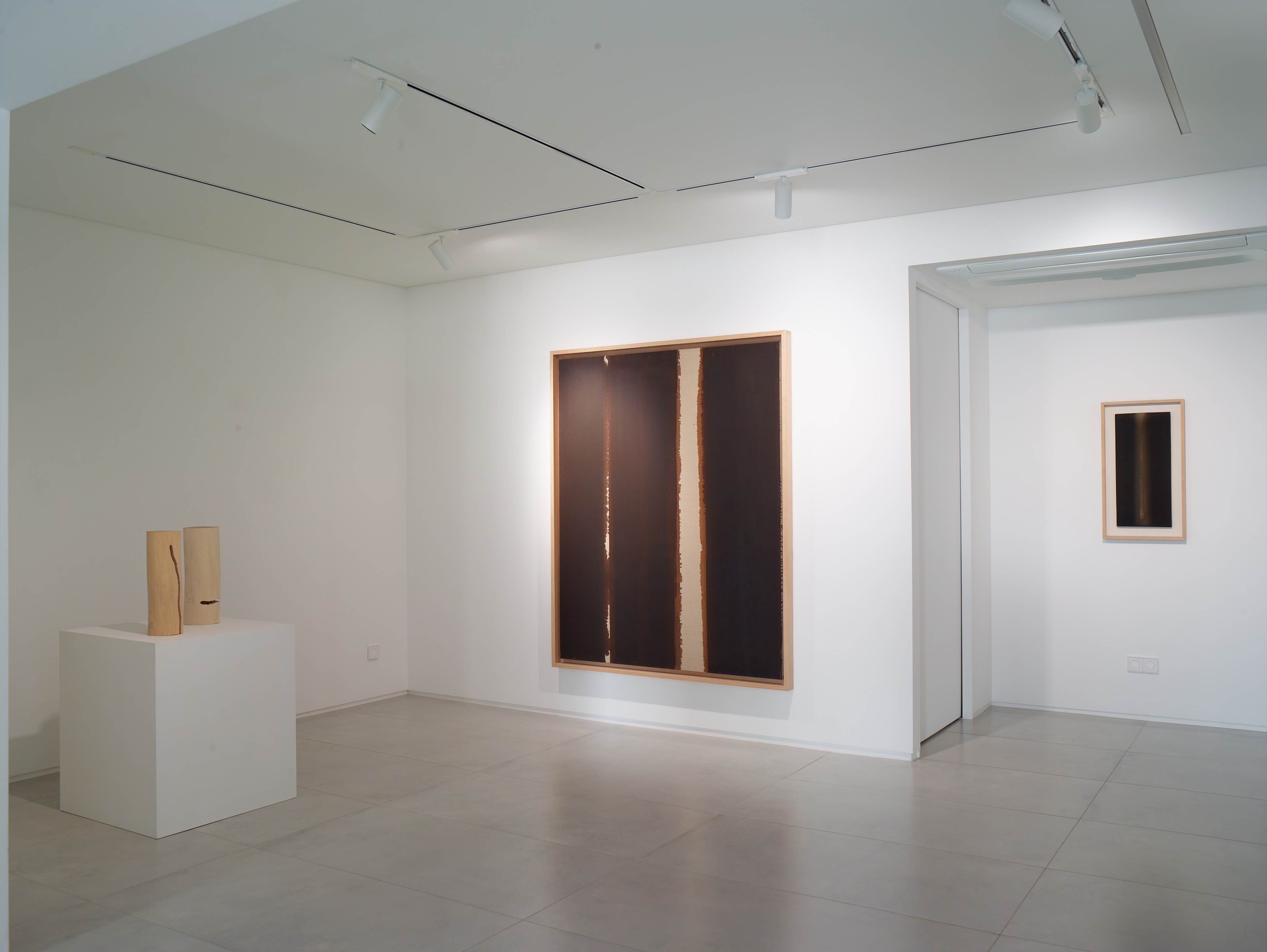
The duet between painter Yun Hyong Keun and sculptor Choi Insu is simultaneously a physical space in which the works of the two artists encounter one another and a relational field in which the two distinct mediums of painting and sculpture—through the ontological modalities of silence and openness, respectively—call to and respond to one another.
Installation View (2)
The Sublime Silence of Yun Hyong Keun’s Painterly Language
It is a state of truth that has settled like sediment after all turbulence has subsided. The traces of bleeding that appear along the edges of his works resemble geological strata formed through weathering and settling over time. For this reason, his pictorial surface remains silent. This silence is not a result of having nothing to say; rather, it is a renunciation of language in order to speak what cannot be spoken. Standing before these works, the viewer comes to a halt before the depth of being. His painting presents a state of sublime composure, opening up a clearing (Lichtung) in which one encounters a density prior to meaning itself.
Choi Insu’s Sculptures and the Aesthetics of Indeterminacy
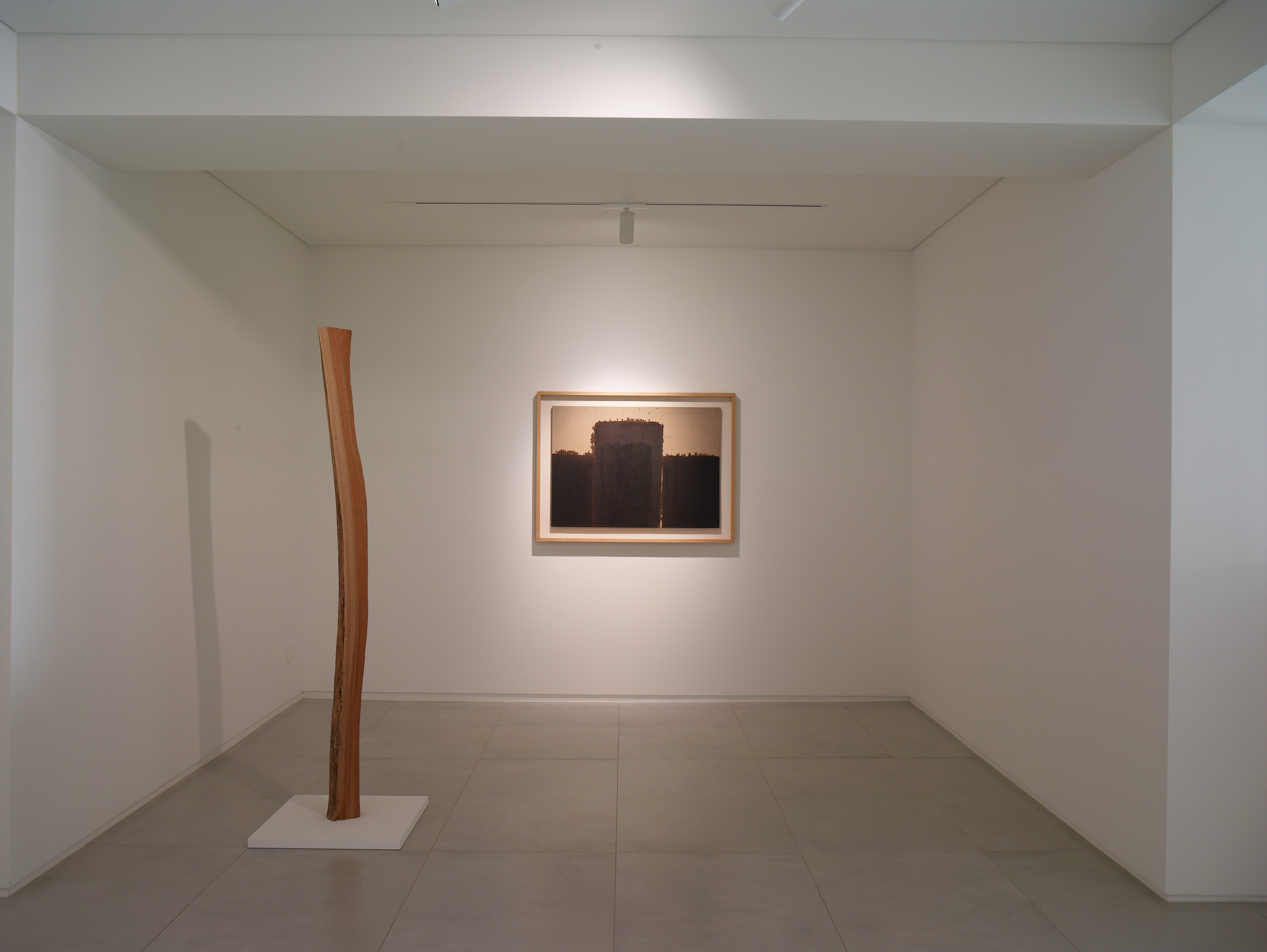
Choi’s sculptural theory may be outlined as follows: sculpture is not about making, but about becoming a site of encounter between matter and mind. His work focuses on making present the process through which the temporality and spatiality inherent in the material are revealed. Rather than viewing sculpture as a mass that occupies space, he views it as a site that opens and activates the spatial field. He respects the material’s intrinsic physicality, or physis, allowing it time to express itself. For Choi, this indeterminacy is not incompleteness or lack, but a condition in which form does not close itself and instead remains continuously open.
Installation View (3)
Aesthetic Counterpoint: The Dialectic of Stillness and Becoming
Against the serene background established by Yun Hyong Keun, Choi Insu’s sculptures as figures acquire a more pronounced presence. Conversely, the vitality generated by Choi’s sculptures reveals that Yun’s silence is not a dead silence but a living one imbued with energy. Viewers encounter a scene in which stillness and becoming, silence and action, and world and earth mutually reflect and interlock. While Yun’s paintings hold viewers within a profound abyss of silence, allowing time to sink deeply, Choi’s sculptures draw them back into the living temporality of matter.
Kim Sukmo (Art historian, PhD in art history)
Exhibition Venue:
M&SONG ART
23 Dosan-daero 27-gil, Gangnam-gu, Seoul, 06032, Republic of Korea
82 2 543 0543
Song Art Gallery
Acrovista Arcade, 188, Seochojungang-ro, Seocho-gu, Seoul, 06600, Republic of Korea
82 2 3482 7096
[GALLERIES] SONG ART GALLERY
- Dates
- 2026. 5. 20 – 6. 18
MORE LIKE THIS