Subversive Play of Inner Turmoil
2026. 1. 21 – 3. 25 | [GALLERIES] GalleryMEME
Nakabayashi Arisa, Enomoto Mariko, Choi Namu, Lee Eunkyong, Jung Soojung
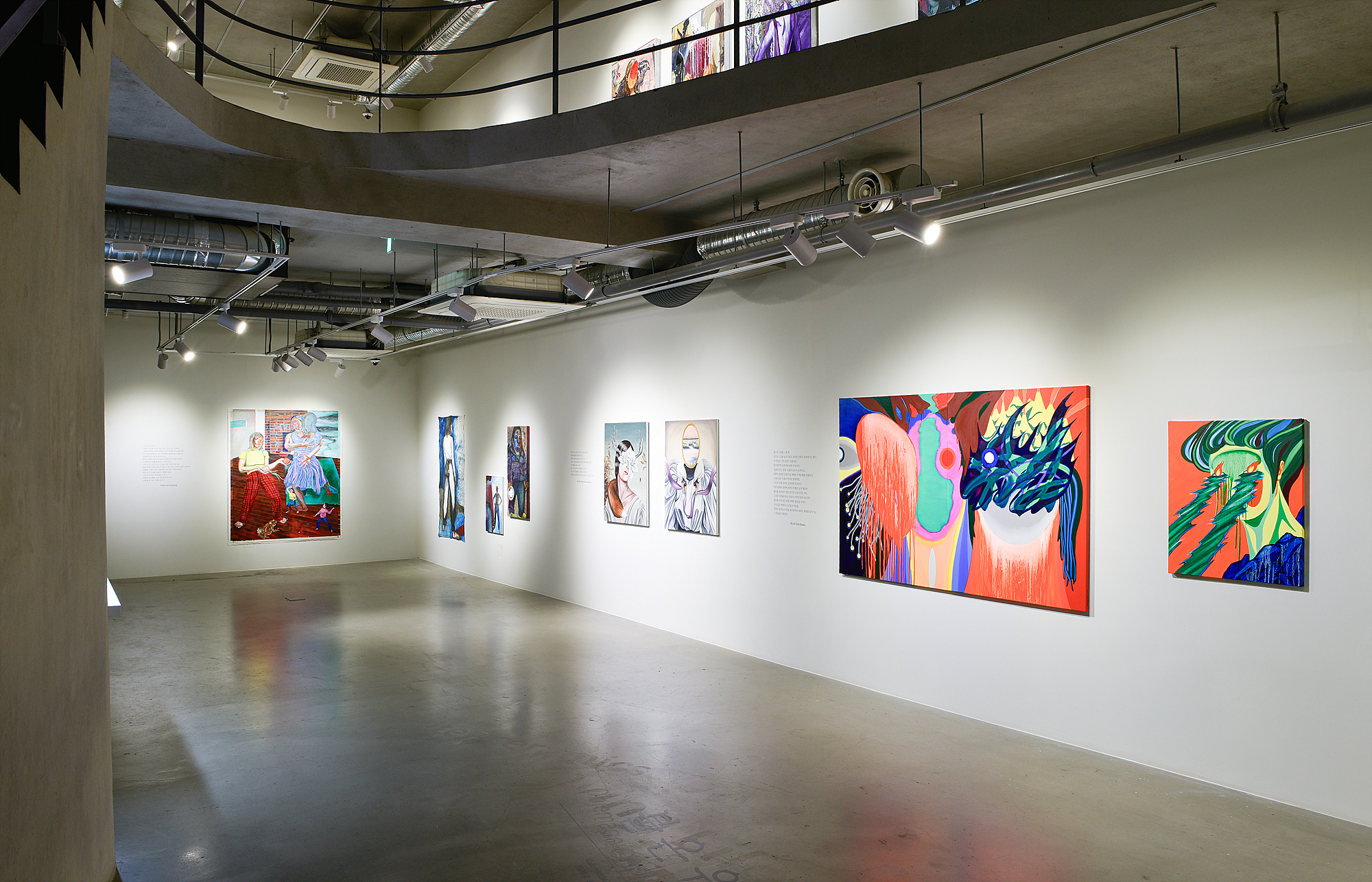
Installation View (1)
The world artists inhabit sparks curiosity—how their seasons cycle, how their inner landscapes sway and shift. Through scenes captured on canvas, we glimpse these worlds of tenderness, uncanny allure, and desire. Each artist engages with the world on their own terms, often living in friction with it and waging private wars of their own.

Installation View (2)
Making art may be, in some sense, an act of honoring one’s own suffering. A philosopher once said that only through a genuine understanding of one’s own misery can human beings find the grounds for greatness. How much more might this be true for artists—those who draw energy from anxiety and pain born of self-division and dissolution, and who long to be led toward a higher state of mind? Their pursuit of an original self may appear uncomfortable, even harsh at times.

Installation View (3)
Yet strangely, textures of distortion, discomfort, and rebellion often weave together scenes of irresistible beauty. As shunning sorrow would also mean shunning love, these unsettling elements, when fully embraced, transform into a radiant language of dazzling play. At the boundaries of pain and pleasure, they are frightening yet beautiful, compelling us to persistently confront them, even when we long to turn away.
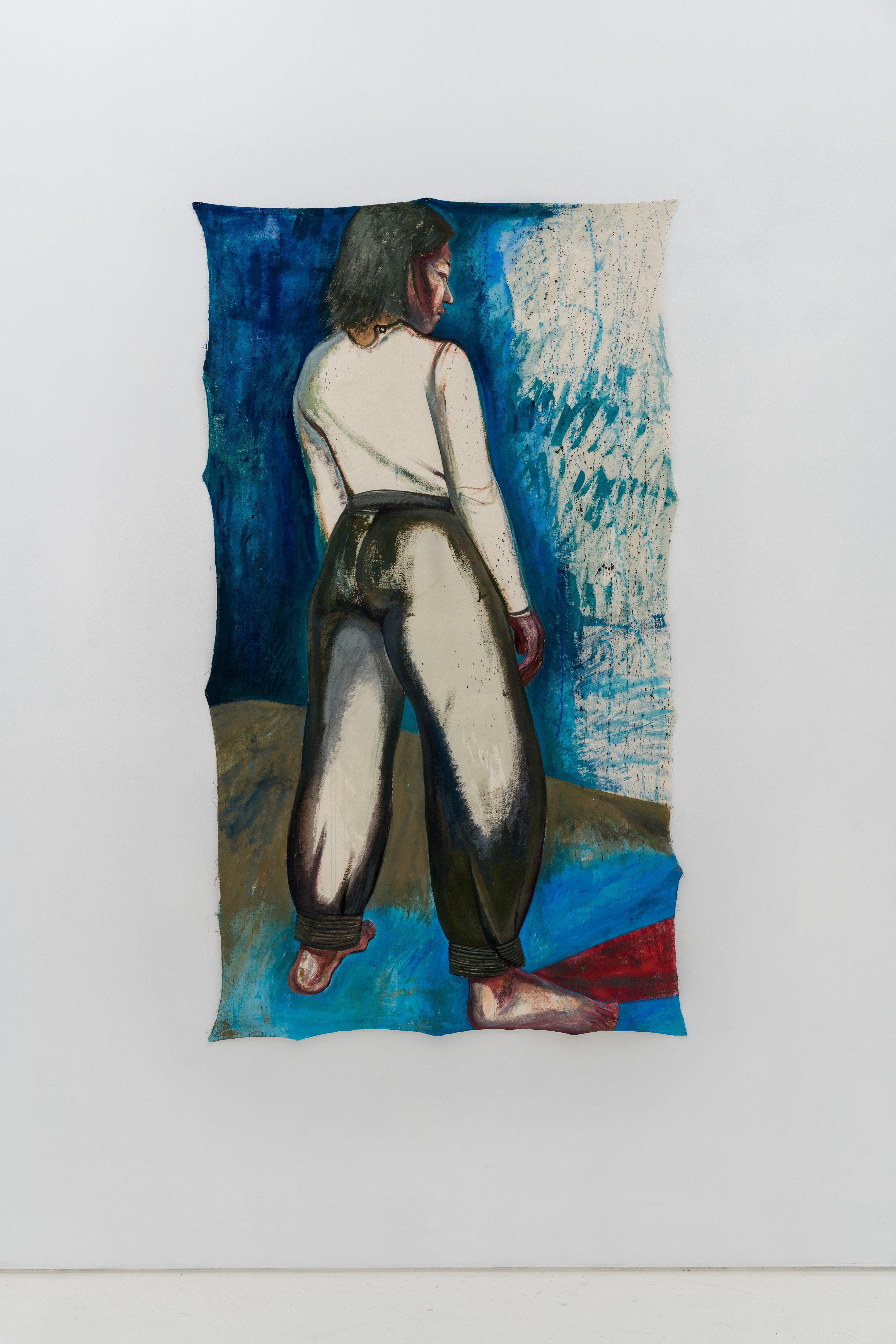
Lee Eunkyong 이은경, pose 1, Acrylic on cotton, 156x91cm, 2025
Lee Eunkyong explores the gaze shaped by anxiety and vulnerability. Born in Africa and having spent her adolescence in Russia, her background invites reflection on experiences of exclusion and discrimination she may have encountered. The figures in her paintings resemble small animals frozen in extreme fear, their bodies enlarged as if responding to imminent threat. “I chose not to look away from anything, and I paint them,” the artist says. Through an ongoing series of self-portraits, she quietly yet intensely observes the moment in which an oppressed, essential self encounters its external persona. It feels like a journey toward recognizing the necessity of self-awareness, reached through the pain of confronting truth.
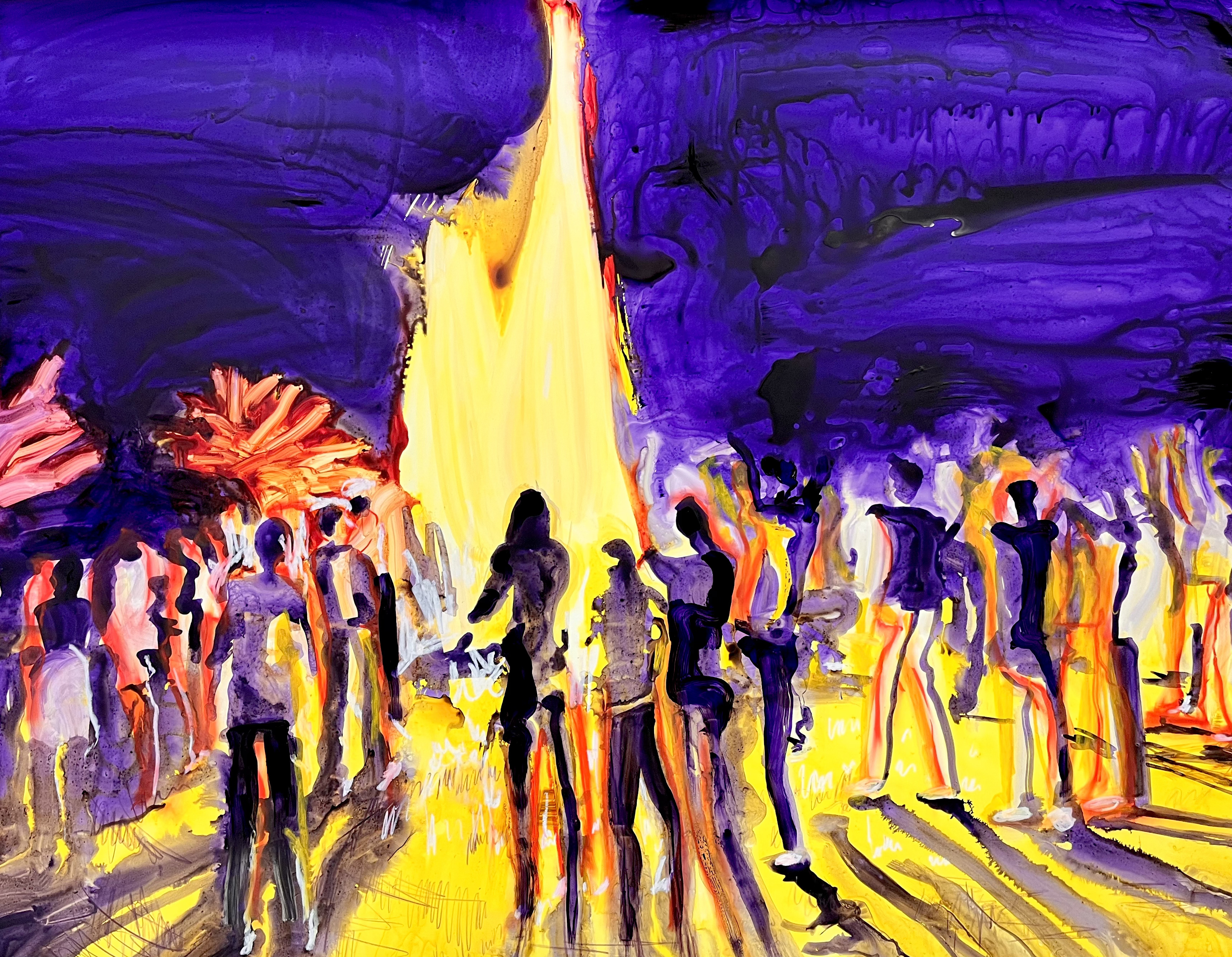
Nakabayashi Arisa 나카바야시 아리사, Untitled_Area to Area 2025-01, Acrylic, oil pastel on paper, 72.7x91cm, 2025
Nakabayashi Arisa turns her gaze toward nature, layering human presence upon it. Displaced individuals drift like fallen leaves, while lives carelessly defined by social judgement appear as trees brutally stripped of their branches. By adopting the form of plants—rooted, unable to escape, forced to endure pain imposed from without—the artist seeks to draw closer to that suffering. In a new work created for her exhibition in Korea, figures gather around a towering flame that rises like a pillar against a violet night sky, posing questions about self and other, inside and outside, center and periphery, inclusion and exclusion.

Choi Namu 최나무, Camouflaged Portrait 위장된 초상, Oil on canvas, 116.8×182.2cm, 2025
Choi Namu visualizes inner instability and fracture through images of nature, creating landscapes that burn with intensity. Tears shoot out like lasers; faces are overlaid with jagged mountain peaks and thorny thickets; plants sprout from bleeding hearts. The artist explains that when confronting anxiety and pain, she reconstructs herself into a stronger form in order to endure—much like a moth that mimics the glaring eyes of a predator on its wings for protection. Therefore, in Choi’s psychological landscapes, this heat and intensity do not signal destruction, but rather the energy of healing and recovery: an expansive gesture of life evolving for survival.

Enomoto Mariko 에노모토 마리코, Women I, Oil on canvas, 91x72cm, 2025
Enomoto Mariko’s portraits obstruct the gaze itself. Impossible combinations of flowers and animals replace eyes—the very elements that typically reveal meaning and inner impulse. While the composition, background, clothing, and facial angles adhere to conventions of portraiture, the works depict no specific individual. The absence of eyes, which would keenly illuminate the self’s inner terrain, is precisely what, paradoxically, allows it to become a portrait of anyone. Unfamiliar and discordant yet irresistibly mysterious, these works draw viewers into an inner space where they confront themselves—and into the blank canvas of the self-portrait they might wish to paint.
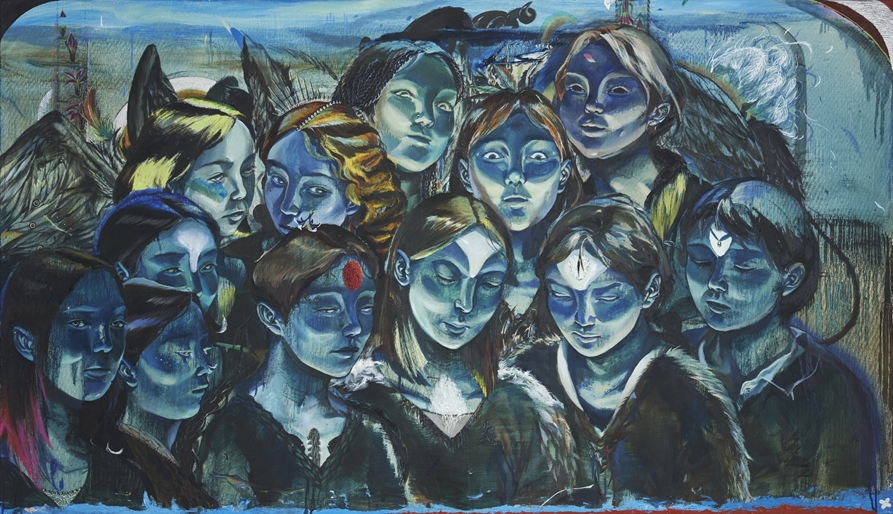
Jung Soojung 정수정, Crowned cranes, Oil on canvas, 165x95cm, 2021
Jung Soojung unfolds worlds drawn from nature, literature, and myth with dynamic vitality, filling her landscapes with sensations as vivid and uncanny as those experienced in dreams. Through her distinctive visual language, she reinterprets narratives that challenge the hierarchies between nature and civilization, the boundaries between imagination and reality, and the limits of desire and convention. Her portrait series, marked by bold color, light, and unfamiliar imagery, deliberately sidesteps long-established conventions of figurative painting. Faces obscured by strange objects, roughly covered in paint, or submerged in shadow overflow with raw life force, counterbalancing the constraints and unspoken violence embedded in social norms.
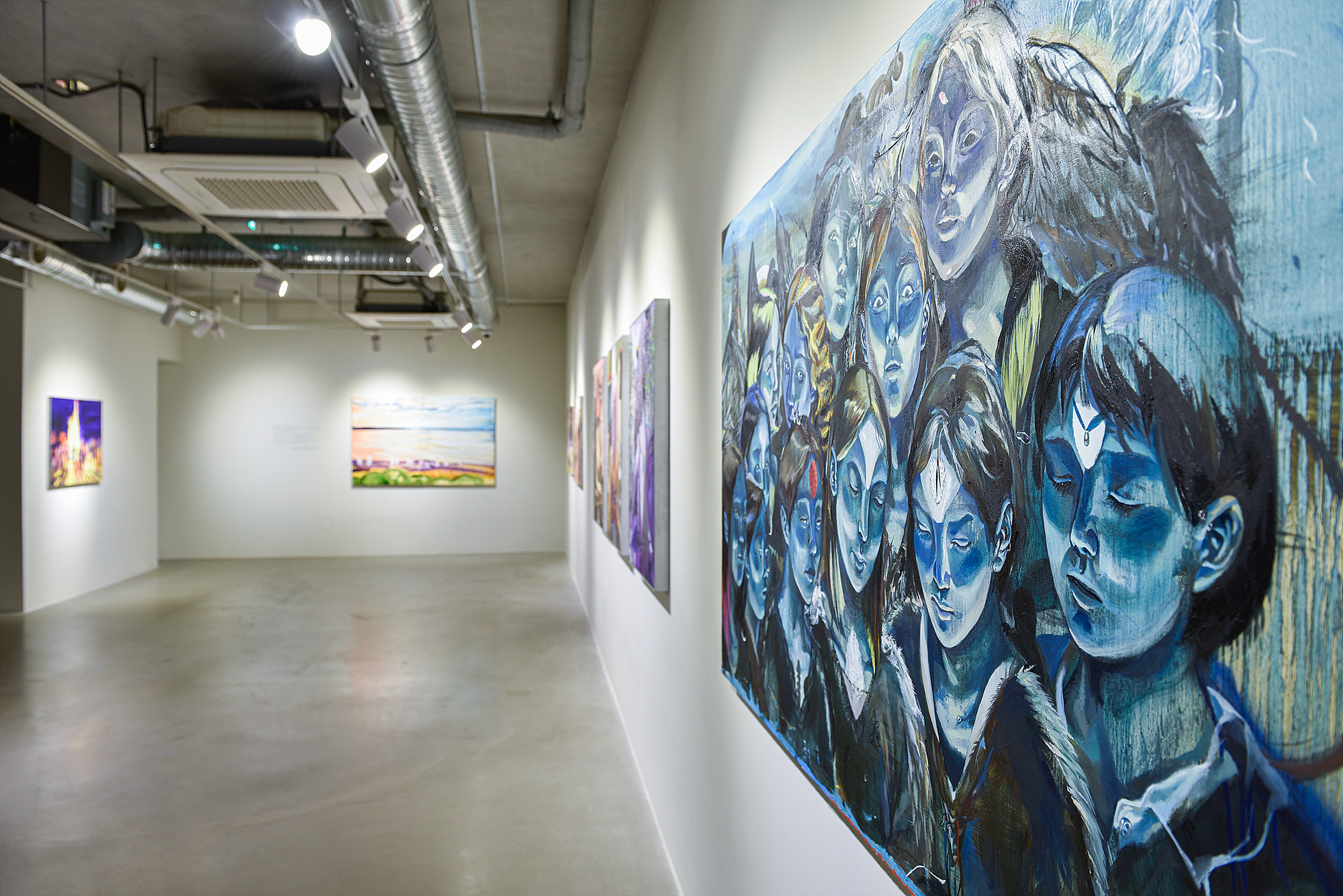
Installation View (4)
These artists fiercely cultivate their own worlds, at times clashing with and reconciling the deep-seated anxieties within. Enomoto Mariko, participating in a Korean exhibition for the first time, writes in her artist’s note: “From the edge of the earth, beyond hell··· I paint something endlessly vast and heavy enough to swallow the unsettling things within me.” We hope that their solitary yet dignified journeys may, from time to time, encounter moments of subversive play.
– Kim Hyunjin (Head Curator of GalleryMEME)
[GALLERIES] GalleryMEME
- Dates
- 2026. 1. 21 – 3. 25
MORE LIKE THIS